
Modern Farshi Shalwar Designs for Women in Pakistan: 7 Best Styles
Modern farshi shalwar designs combine the recognisable width of traditional farshi clothing with practical lengths, updated shirts and ready-to-wear construction. In Pakistan, these designs are commonly produced as stitched two-piece sets with a short or medium-length shirt and a wide lower garment.
The modern version is different from the heavily extended farshi pajama associated with older formal clothing. It normally has less trailing fabric, controlled gathering around the waist and a hem that reaches close to the floor without creating unnecessary length. These changes make the design more suitable for current Pakistani clothing collections.
Plain colours, contrasting combinations, floral prints, graphic patterns and Punjabi kurtis are now used with the farshi cut. However, the garment must retain its defining construction. A wide trouser does not automatically qualify as a farshi shalwar.
For its history, traditional form and complete design classification, read the detailed farshi shalwar guide.
Table of Contents
- What defines modern farshi shalwar designs?
- How the traditional cut has been updated
- Seven modern Pakistani designs
- Modern shirt construction
- Farshi shalwar construction
- Fabrics and print selection
- Differences from similar trousers
- Quality points to examine
- Frequently asked questions
What Defines Modern Farshi Shalwar Designs?
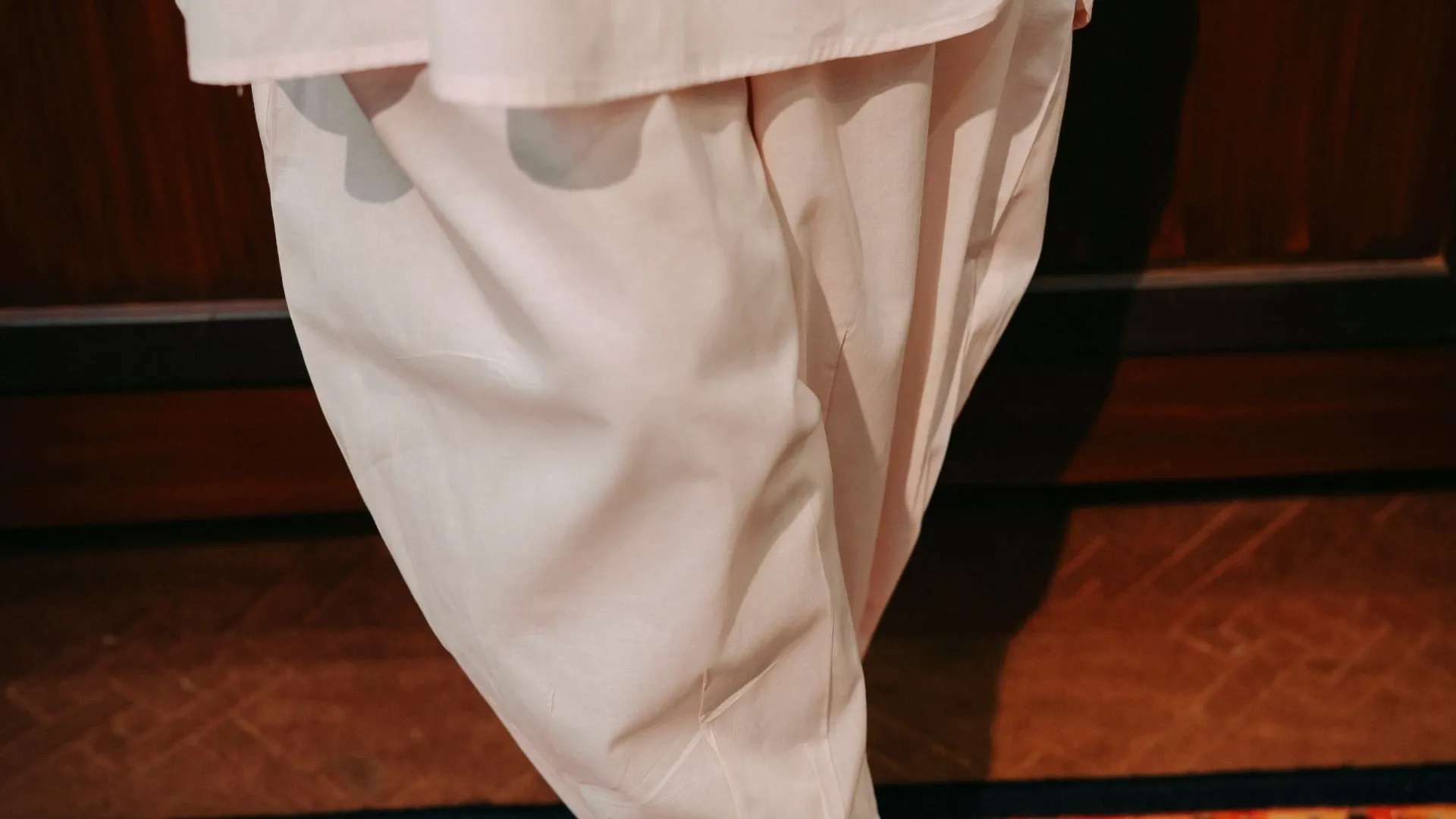
Modern farshi shalwar designs are identified by a broad lower shape, controlled floor-level length and a shirt designed specifically for the width of the shalwar. The lower garment may use gathers, pleats, panels or separate kalis to create volume.
A well-developed farshi shalwar remains wide through its lower section. It does not narrow around the ankles like a regular shalwar and does not follow the straight leg structure of palazzo trousers.
The shirt is usually short or medium in length. This keeps the gathered upper section of the shalwar visible and creates a clear difference between the two garments. Necklines, sleeves and colour placement provide modern detail without changing the basic traditional structure.
Current versions may use elasticated waistbands, drawstrings or combined fastenings. These methods help control the additional fabric required for the lower garment. The waistband should remain strong, flat and evenly gathered.
How the Traditional Farshi Cut Has Been Updated
Historical farshi garments could use extensive fabric that rested or spread across the floor. Modern farshi shalwar designs usually reduce that length while preserving a broad hem and low finish.
The width has also become more controlled. Instead of using the maximum possible fabric, contemporary patterns distribute enough volume to establish the design without creating excessive bulk around the waist. Panelled cutting is often used to manage this volume.
Ready-to-wear production has introduced greater consistency in shirt length, sleeve construction, waist finishing and hem level. These details allow the design to be produced in stitched collections rather than only through individual tailoring.
The broader shalwar kameez tradition includes many regional shirt and trouser forms. Modern farshi clothing is one adaptation within this larger Pakistani and South Asian clothing system.
Recent regional fashion reporting has also recorded renewed interest in farshi salwar suits alongside other traditional cuts, showing that the design remains relevant in current eastern wear.
7 Modern Farshi Shalwar Designs in Pakistan
1. Controlled-Volume Farshi Shalwar
The controlled-volume design keeps the broad farshi shape but reduces excessive fabric around the waist and lower hem. This creates a cleaner structure and makes the shalwar easier to include in stitched two-piece sets.
The lower garment still requires clear gathering and a wide opening. If the gathers are removed entirely and each leg is cut straight, the result is closer to a palazzo than a farshi shalwar.
A controlled cut works particularly well with a short shirt because the waistband and upper construction remain visible. The shirt should have enough room around its lower edge to sit correctly over the gathers.
2. Plain Matching Farshi Set
A plain matching design uses the same colour across the shirt and shalwar. Without a print, greater attention falls on the cut, neckline, sleeves and stitching quality.
Modern farshi shalwar designs in matching colours may use strong shades, softer tones or neutral colours. The fabric colour should remain consistent across both pieces. Differences between dye batches are more noticeable in a plain coordinated set.
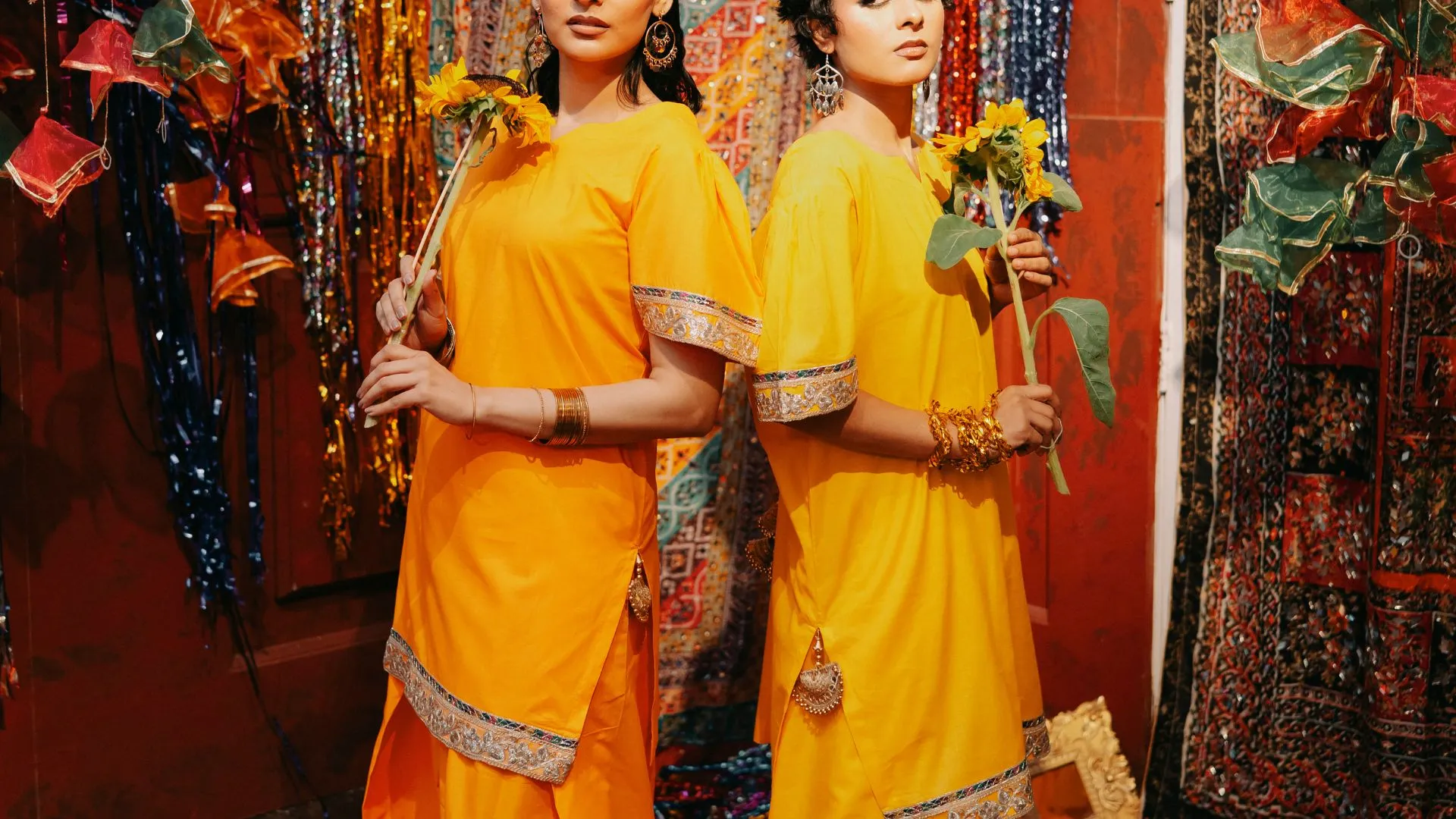
The yellow farshi shalwar two-piece set demonstrates how one colour can be used across a kurti and broad shalwar while keeping the design clear and structured.
3. Plain Shirt With Printed Farshi Shalwar
This format places the main print on the lower garment. A plain shirt prevents the complete set from becoming crowded and allows the printed farshi construction to remain visible.
Print scale is important because the shalwar uses more fabric than a conventional trouser. Small repeated patterns are easier to distribute across gathers and panels. Large prints require careful cutting so important motifs are not divided at prominent seams.
The shirt colour should connect directly with the print. It may repeat the base colour, a major motif shade or the printed border.
The blue floral and white farshi shalwar set uses a plain upper garment with a printed lower piece, giving each element a clear function.
4. Printed Coordinated Farshi Set
Printed coordinated sets use related patterns or colours across both garments. The print may be identical throughout or adjusted between the shirt and shalwar.
A smaller pattern can be used across the complete set, while a larger pattern may need plain sections to maintain balance. Shirt borders, sleeve details and shalwar panels should follow a consistent pattern direction.
The purple printed farshi shalwar two-piece set presents a coordinated printed format in a stitched kurti and shalwar design.
Printed modern farshi shalwar designs should be evaluated for pattern placement as well as colour. Poorly positioned motifs can make correctly stitched panels appear uneven.
5. Contrasting Shirt and Farshi Shalwar
A contrasting design uses different colours for the upper and lower garments. This creates a clear division between the shirt and wide shalwar.
Dark-and-light combinations provide strong definition. The colours should still have a planned connection so the set does not look like two unrelated garments.
The maroon and white farshi shalwar set combines a darker shirt with a light lower garment. This allows the structure of both pieces to remain visible without depending on a detailed print.
Contrast can also be introduced through borders, neckline finishes or sleeve details rather than using completely separate colours.
6. Black and White Printed Farshi Design
Black-and-white designs use a limited colour range with strong print definition. Geometric, abstract and floral patterns can all be used within this combination.
Because the contrast is high, pattern direction and seam placement become more visible. Major lines should not shift unnecessarily where separate panels join.
A black and white printed farshi shalwar set combines a traditional shirt shape with a printed lower garment. The limited palette keeps the design controlled while the print adds detail.
Black-and-white modern farshi shalwar designs can use either a plain black shirt with a printed shalwar or distribute the print across both pieces. Construction should determine which option provides the clearer result.
7. Punjabi Farshi Shalwar With Short Kurti
The Punjabi version combines a short kurti with a broad farshi shalwar. The shirt may use puff sleeves, a round neckline, a small V-cut or a compact straight shape.
Shorter shirt length keeps the gathered waist and width of the shalwar visible. This is one of the clearest differences between a Punjabi farshi set and designs that use longer kameez cuts.
The orange Punjabi farshi shalwar set uses a matching kurti and wide lower garment in a stitched two-piece format.
A complete explanation of the regional cut is available in the Punjabi farshi shalwar article.
Shirt Details Used in Modern Farshi Shalwar Designs
Modern shirts use controlled construction to balance the width of the lower garment. Short kurtis are common, but medium-length shirts may also be used when they do not conceal most of the shalwar.
Round necklines provide a simple finish. Small V-cuts, front slits and shaped neck openings add definition while keeping the shirt suitable for a coordinated set. The neckline should lie flat and maintain its intended form.
Puff sleeves and half-puff sleeves add structure around the shoulders. Their gathers should be distributed evenly, and both sleeves should maintain the same shape. Straight sleeves provide a simpler alternative when the lower garment already contains print or strong colour contrast.
Shirt hems and side openings require clean finishing. A short shirt sits directly above the gathered waist, making uneven hems particularly noticeable.
Farshi Shalwar Construction in Modern Sets
The waistband must support the additional fabric used in the lower garment. Elastic and drawstring systems should be properly enclosed and securely attached.
Gathers should remain balanced around the complete waist. Excess fabric concentrated at the front or back can produce unnecessary thickness and affect the shape.
Panelled farshi shalwars require straight, secure seams. Each panel should follow the same fabric direction. Printed panels should also maintain consistent motif placement where the pattern allows.
The broad lower hem must remain level. An uneven hem is more visible on a farshi shalwar because the opening is significantly wider than a regular trouser or conventional shalwar.
More information about how the shirt and lower garment work together is available in the guide to two-piece farshi shalwar sets.
Fabrics for Modern Farshi Shalwar Designs
Lightweight cotton and lawn-based materials can support warm-weather designs when they have enough structure to hold the gathers. These fabrics can carry printed patterns without creating excessive weight around the waistband.
Medium-weight cotton blends produce a more defined shape. Linen blends and textured fabrics may also be used, but thick material requires controlled gathering to prevent bulk.
Silk and silk-like fabrics provide a smoother surface and softer fall. They require precise cutting because separate layers can shift while panels and hems are stitched.
Fabric selection should be based on construction requirements. The material must support the waistband, maintain secure seams and produce an even broad hem.
Pakistan’s wider fabric traditions include regional weaving, dyeing and embroidery practices. The collection documented through Pakistan’s first dedicated textile museum demonstrates the variety and technical importance of Pakistani textiles.
 How Modern Farshi Shalwar Differs From Similar Designs
A regular shalwar is wide around the waist and thighs but narrows towards the ankles. A farshi shalwar maintains considerably more width through the lower section.
A palazzo uses separate straight or gradually widening legs. It normally has less gathering and a more recognisable trouser structure.
A gharara remains fitted above the knee and expands below a visible joint. A sharara has two flared legs but does not always use the same gathered waist or floor-level farshi construction.
A balloon shalwar has a curved, rounded shape that narrows towards its lower opening. Farshi shalwar remains broad at the hem instead of closing into a compact ankle or lower-leg section.
These differences should be identified through pattern construction rather than general terms such as “wide trousers.”
Quality Points to Check
Modern farshi shalwar designs should have an even waistband, balanced gathers, secure panels and a level hem. The lower garment should maintain its broad shape without excessive thickness in one area.
The shirt neckline must sit flat, the sleeves should match and the hem should remain even. Any decorative details should be attached securely without pulling the fabric.
Printed garments require consistent pattern direction. Borders and major motifs should be positioned carefully around panels, shirt openings and sleeve sections.
Both garments should also share a clear design connection through colour, print, fabric or finishing. This confirms that the set was developed as one outfit rather than assembled from unrelated pieces.
Frequently Asked Questions About Modern Farshi Shalwar Designs
What makes a farshi shalwar design modern?
Modern versions use controlled fabric volume, practical floor-level length, secure waist construction and updated shirt details while retaining the broad farshi shape.
Are modern farshi shalwars the same as palazzo trousers?
No. Palazzo trousers normally have straight or gradually widening legs. Farshi shalwars use greater gathering and finish with a broader traditional lower shape.
Can a modern farshi shalwar use printed fabric?
Yes. Printed fabric may be used for the shirt, lower garment or both pieces. Print direction and placement must remain consistent across wide panels.
Why are short kurtis common with farshi shalwar?
A short kurti keeps the gathered waistband and upper width visible. A longer shirt may cover the main construction details of the shalwar.
Do modern farshi designs have to use matching colours?
No. They can be matching, contrasting, floral or black and white. The colour treatment can change without affecting the garment category, provided the lower construction remains farshi.
Modern Farshi Shalwar in Pakistani Eastern Wear
Modern farshi shalwar designs maintain the width and broad hem of traditional farshi clothing while using practical lengths, current shirt cuts and consistent stitched construction. Plain matching sets, printed lower garments, contrasting colours and Punjabi kurtis provide several clear design options.
The most important features remain the waistband, gather distribution, fabric weight, panel alignment and lower hem. These construction points separate a proper farshi shalwar from a standard wide trouser.
Explore stitched farshi sets and other Pakistani eastern clothing through the YASHAM® online shop. Visit the official YASHAM® website for full product information and follow YASHAM® on Instagram for product photographs and collection updates.