
Punjabi Farshi Shalwar: 7 Key Features, Shape and Modern Designs
Punjabi farshi shalwar is a wide lower garment that combines the volume of a farshi cut with the practical proportions associated with Punjabi eastern wear. It is generally worn with a short or medium-length kurti so that the gathered waist, broad lower section and floor-length shape remain visible.
Unlike a conventional Punjabi shalwar, which normally narrows towards the ankles, a farshi version maintains substantial width through its lower section. Its appearance depends on fabric quantity, the distribution of gathers, the construction of the waistband and the balance between the kurti and shalwar.
Modern Pakistani designers have adjusted the traditional shape to make it suitable for stitched clothing. Contemporary versions retain the recognisable width but usually avoid the excessive trailing length found in some historical farshi garments. For a broader explanation of the garment’s development and different variations, read the complete farshi shalwar guide.
Table of Contents
- What is a Punjabi farshi shalwar?
- Cultural and design background
- Punjabi farshi shalwar shape and construction
- Seven defining features
- Modern design variations
- Suitable fabrics
- Differences from other shalwar styles
- How to evaluate quality
- Frequently asked questions
What Is a Punjabi Farshi Shalwar?
A Punjabi farshi shalwar is recognised by its wide, gathered shape and its pairing with a Punjabi-style kurti. The word “farshi” is associated with the floor, referring to the way the lower garment reaches or visually spreads close to ground level. In modern clothing, this effect is usually achieved without creating an impractical trail.
The shalwar carries considerable volume from the waist into a broad hem. Depending on the pattern, this volume may be formed through gathers, pleats, panels or kalis. The upper garment is commonly shorter than a standard long kameez, allowing the structure of the shalwar to remain an important part of the complete outfit.
A Punjabi farshi shalwar should not be identified by colour or decoration alone. It may be plain, printed, embroidered or made in contrasting shades. The classification depends primarily on the shape of the lower garment and its proportion with the kurti.
Cultural and Design Background
The Punjabi suit belongs to the wider shalwar kameez tradition found across Pakistan and other parts of South Asia. A general overview of shalwar kameez forms explains that Punjabi suits developed distinct regional cuts, including straight shirts with side openings and shalwars shaped differently from Afghan and Balochi versions.
Traditional Punjabi clothing includes several lower-garment forms. These range from regular gathered shalwars to Patiala shalwars, suthan-based cuts and contemporary wide trousers. The Punjabi farshi variation should therefore be understood as part of a wider tailoring tradition rather than the only recognised Punjabi shalwar.
The historic farshi pajama was associated with highly extended, floor-length construction. Modern Pakistani fashion has adapted that idea by combining a broad farshi shape with a shorter Punjabi kurti. The resulting design preserves clear regional proportions while using manageable length and standardised ready-to-wear construction.
Pakistan’s clothing traditions also reflect the country’s broader textile history. Reporting on Pakistan’s first dedicated textile museum highlights the variety of weaving, embroidery and dyeing practices found across regional communities. Modern eastern clothing continues to use this textile knowledge while introducing updated cuts and production methods.
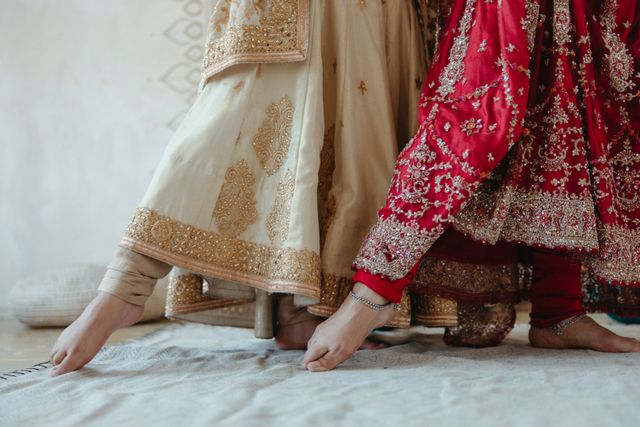
Punjabi Farshi Shalwar Shape and Construction
The shape begins at the waistband, where a large quantity of fabric must be controlled without creating excessive thickness. Even gathers produce a balanced fall, while poorly distributed fabric can make one side appear heavier than the other.
Below the waist, the garment expands into a wide body. It does not follow the close leg shape of a straight trouser and does not narrow sharply at the ankle like a conventional shalwar. The lower section remains open and broad, producing the recognisable floor-length outline.
Some patterns use multiple panels to create width. Panelled construction allows the designer to control where the volume begins and how it falls. It can also help manage printed fabric because motifs may be positioned more carefully across separate sections.
The hem is one of the most important parts of the design. It must be wide enough to support the farshi appearance while remaining even around the complete garment. The correct finished length should create a floor-grazing effect without leaving unnecessary fabric under the feet.
The kurti completes the proportion. A short kurti keeps the gathered waist visible and prevents the upper garment from covering too much of the shalwar. A medium-length shirt can also be used if its cut does not hide the width or restrict movement.
7 Defining Punjabi Farshi Shalwar Features
1. A Wide Lower Shape
Width is the main structural feature of a Punjabi farshi shalwar. The fabric should create visible volume from different angles, not only when the garment is spread for photography.
The correct width depends on fabric type and pattern construction. More fabric does not automatically mean better design. The volume must be controlled so the shalwar maintains a clear outline instead of forming uneven bulk.
2. Gathered or Pleated Waist Construction
Gathering allows a broad section of fabric to fit into the waistband. Fine, evenly spaced gathers generally create a smoother fall. Larger pleats can produce greater structure but must be positioned consistently.
The waistband should remain secure because it supports more fabric than a standard trouser. Elastic, a drawstring or a combined fastening system may be used, provided the finishing is strong and comfortable.
3. Broad Floor-Length Hem
A farshi hem is considerably wider than the lower opening of a regular Punjabi shalwar. It should reach close to the floor and maintain an even line.
This section requires careful stitching because it receives regular movement and contact. Twisted seams, irregular lengths and weak finishing become particularly noticeable across a broad hem.
4. Short or Medium-Length Kurti
The upper garment is usually designed to display the shalwar rather than cover it. A shorter kurti creates a clear visual division between the structured shirt and the flowing lower garment.
The orange Punjabi farshi shalwar two-piece set demonstrates this proportion through a short kurti, defined neckline and wide farshi shalwar.
5. Defined Sleeve and Neckline Details
Modern Punjabi designs frequently use sleeve shape and neckline finishing to give structure to the kurti. Puff sleeves, half-puff sleeves, straight sleeves, round necklines and controlled V-shaped cuts are common options.
These elements should support the outfit rather than compete with the volume below. A clean neckline and well-shaped sleeve can add definition without requiring heavy decoration.
6. Clear Colour or Print Distribution
Colour placement influences how the complete silhouette is understood. A matching set produces continuity between the kurti and shalwar, while contrasting colours separate the two garments more clearly.
Printed versions require careful cutting because the shalwar uses a large fabric area. Repeated motifs should be distributed consistently, and prominent patterns should not be broken unnecessarily at major seams.
7. Practical Modern Length
Historic farshi garments could use enough length to spread across the floor. A modern Punjabi farshi shalwar normally reduces this extension while retaining a floor-grazing appearance.
This controlled length is an important design improvement. It protects the traditional character of the garment but makes the shape more suitable for contemporary stitched collections.
Modern Punjabi Farshi Shalwar Designs
Modern designs can be organised according to colour treatment, print placement, shirt construction and the amount of volume used in the shalwar.
Plain Coordinated Designs
A plain coordinated set uses one colour for both pieces. This approach makes the cut, gathers and stitching more noticeable because there is no print to distract from construction.
Strong shades can give a plain Punjabi farshi suit a clear visual identity. The success of the design depends on even colour, neat seams and accurate proportions rather than additional surface work.
Plain Kurti With Printed Shalwar
Pairing a plain shirt with a printed lower garment places attention on the farshi shape. This is particularly effective when the print is repeated evenly across the width.
The print scale should suit the amount of fabric. Small and medium motifs usually distribute more consistently, while larger motifs require planned placement during cutting.
Printed Kurti With Plain Shalwar
The reverse combination directs attention towards the neckline, sleeves and shirt construction. A plain shalwar provides a stable base and keeps the outfit from becoming visually crowded.
This design works best when the colour of the lower garment is taken from the shirt print, creating a clear relationship between the two pieces.
Contrasting Two-Colour Designs
A contrasting Punjabi farshi shalwar set uses separate colours for the shirt and lower garment. Dark-and-light pairings create strong definition, as seen in the maroon and white farshi shalwar set.
Contrast should appear intentional. The two shades need sufficient visual connection through their tone, finishing or supporting details.
Black-and-White Printed Designs
Black-and-white patterns provide strong definition without requiring multiple colours. A black and white printed farshi shalwar set shows how a graphic print can be combined with traditional garment proportions.
Pattern alignment and clean seam finishing are especially important because irregularities can be more visible in high-contrast fabric.
Floral Farshi Designs
Floral prints can be used across the shalwar, the kurti or both garments. They may range from small repeated flowers to larger botanical patterns.
A floral farshi shalwar should be cut with attention to pattern direction. Upside-down motifs, disrupted borders or uneven placement can weaken the overall finish.
Controlled-Volume Farshi Designs
Some contemporary versions use reduced width to improve movement and decrease bulk around the waist. These designs still require a broad hem and clear floor-length appearance to remain recognisable as farshi shalwar.
Controlled-volume construction is not simply a palazzo cut. The gathered waist and traditional kurti pairing should still be present.
Fabrics Suitable for Punjabi Farshi Shalwar
Fabric affects the fall, structure and weight of the complete garment. Lightweight cotton, lawn-based materials and soft blends can create fluid movement in warmer conditions. They are also suitable for printed designs when the material is sufficiently opaque and stable.
Medium-weight cotton blends provide more structure and help the garment maintain a defined shape. Linen blends can also work, although thick fabric must be gathered carefully to prevent excessive bulk at the waist.
Silk and silk-like materials produce a smoother fall but require precise cutting and stitching. Slippery fabric can shift during construction, affecting panel alignment and hem accuracy.
Whatever material is selected, it must support the garment’s width, hold secure seams and form a clean hem. Fabric should be chosen for construction quality rather than appearance alone.
How Punjabi Farshi Shalwar Differs From Other Styles
A regular Punjabi shalwar is wide at the top and normally gathers or narrows around the ankles. Its lower opening is much smaller than that of a farshi design.
A Patiala shalwar contains numerous folds and has a draped appearance around the legs. Although it uses significant fabric, it does not create the same broad, floor-length hem.
A gharara is generally fitted above the knee and flares below a defined knee joint. A sharara has separate flared legs but may not use the same gathered waistband or Punjabi kurti proportion.
Palazzo trousers have straight or gradually widening legs. They normally use less gathering and present a cleaner trouser structure. The Punjabi farshi shalwar is distinguished by its combination of concentrated upper volume, broad hem and short kurti.
How to Evaluate a Punjabi Farshi Shalwar Suit
Begin with the waistband. It should support the garment’s weight without twisting or allowing the gathers to shift. Check whether the fabric is distributed evenly around the front and back.
Examine the main seams and any added panels. Stitching should remain straight, secure and flat. Printed panels should follow a consistent pattern direction wherever possible.
Review the hem from all sides. It should be level, neatly finished and free from unwanted twisting. The length needs to produce the intended shape without excessive dragging.
Finally, assess the relationship between both pieces. The kurti and shalwar should appear designed as one set. Colour, print scale, sleeve construction and garment proportions should support each other.
Frequently Asked Questions About Punjabi Farshi Shalwar
What defines a Punjabi farshi shalwar?
It is defined by a gathered or panelled waist, substantial width, a broad floor-length hem and pairing with a Punjabi-style kurti.
Is it the same as a traditional Punjabi shalwar?
No. A traditional Punjabi shalwar usually narrows or gathers at the ankles. The farshi version maintains a much wider lower opening.
Can Punjabi farshi shalwar be printed?
Yes. It may be plain, floral, printed or constructed with contrasting colours. The cut, rather than the surface pattern, determines the garment type.
Why is it commonly paired with a short kurti?
A short kurti keeps the gathered waist and upper volume visible. It also creates a balanced proportion between the compact shirt and wide lower garment.
Is modern farshi shalwar as long as historical farshi pajama?
Usually not. Modern versions generally reduce the trailing length to provide easier movement while maintaining a floor-grazing appearance.
A Clear Punjabi Interpretation of the Farshi Shape
Punjabi farshi shalwar combines a wide lower garment with the defined proportions of a Punjabi kurti. Its main features include an evenly gathered waist, controlled volume, broad hem, practical floor length and balanced upper garment.
Modern versions may use plain colours, floral prints, contrasting pieces or structured sleeve details. Regardless of decoration, construction remains the main factor that separates a proper farshi design from a regular shalwar or wide trouser.
Explore stitched farshi sets and other eastern clothing through the YASHAM® online shop. For new product photographs and collection updates, visit the official YASHAM® website and follow YASHAM® on Instagram.