
How Modern Cuts Are Changing Pakistani Eastern Wear
Modern cuts in Pakistani eastern wear are changing how shirts, shalwars, trousers, kaftans and coordinated sets are constructed. The changes are visible in shirt length, shoulder placement, garment width, sleeve shape, side openings and the distribution of fabric across the complete outfit.
Pakistani eastern wear has traditionally included considerable variation. Straight kameez designs, short kurtis, wide shalwars, fitted trousers and long shirts have all existed in different regional and design contexts. Contemporary clothing builds on this foundation by adjusting proportions and combining familiar garment elements in new ways.
Short loose-fit shirts are now paired with balloon and farshi shalwars. Drop shoulders have become common in co-ord sets, while straight trousers are used with long shirts and textured fabrics. Kaftans have also developed more controlled cuts, defined necklines and separate sleeves.
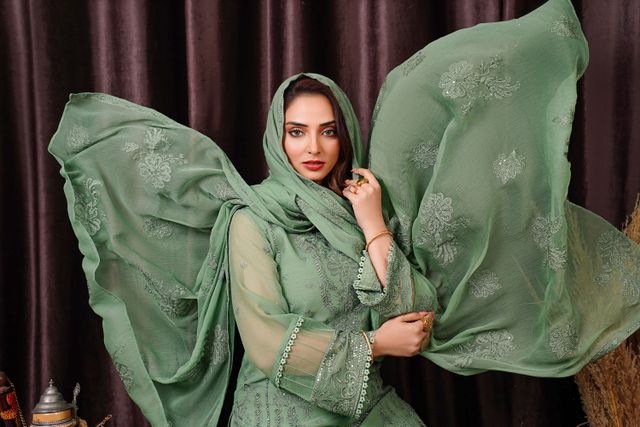
These changes do not remove the eastern identity of the garments. Instead, they demonstrate how pattern development and ready-to-wear production can update familiar Pakistani clothing.
Table of Contents
- What Are Modern Cuts in Pakistani Eastern Wear?
- Traditional Foundations of Modern Garments
- Nine Ways Modern Cuts Are Changing Eastern Wear
- Modern Trouser and Shalwar Construction
- The Role of Fabric in Modern Cuts
- Traditional and Modern Cut Comparison
- Examples from YASHAM®
- Frequently Asked Questions
What Are Modern Cuts in Pakistani Eastern Wear?
Modern cuts in Pakistani eastern wear refer to updated garment patterns and proportions rather than surface decoration alone. A shirt does not become modern only because it has a new print. Its shoulder, sleeve, width, hem and length must also support the intended design.
Contemporary cuts include short boxy shirts, loose-fit tops, drop-shoulder kurtis, straight long shirts, structured kaftans and coordinated separates. Modern lower garments include straight trousers, wide-leg trousers, balloon shalwars and tulip shalwars.
Some of these shapes are based on established eastern garments. The difference appears in how their volume is controlled and how they are combined with other pieces.
A traditional shalwar may be paired with a medium-length kameez, while a modern balloon shalwar may use a shorter loose-fit shirt. A farshi shalwar can retain its broad lower construction while being included in a coordinated ready-to-wear set.
These design developments are part of the wider category explained in the YASHAM® guide to modern eastern wear for women.
Traditional Foundations of Modern Garments
Pakistani women’s clothing contains a wide range of established garment structures. The kameez uses front and back panels, sleeves, a neckline and side openings. A traditional shalwar controls considerable fabric through gathers or pleats at the waist and ankle.
Regional clothing has also included variations in shirt length, trouser width and surface work. Modern design does not begin from a single standard outfit. It draws from several forms of Pakistani clothing and adjusts them for current collections.
The relationship between established and updated garments is examined in greater detail in the guide to traditional vs contemporary Pakistani clothing.
Traditional craftsmanship continues to influence embroidery, woven fabrics, border treatments and garment finishing. UNESCO’s overview of traditional craftsmanship explains the wider importance of knowledge and skills connected to handmade production.
Modern cuts can support these craft methods by providing cleaner panels and focused areas for embroidery. Updated pattern development therefore does not need to compete with traditional work.
Nine Ways Modern Cuts Are Changing Eastern Wear
1. Shorter Shirt Lengths
One of the most visible changes is the return of shorter shirts. These shirts may finish near the upper thigh instead of extending toward the knees.
A shorter shirt keeps more of the lower garment visible. This makes it particularly suitable for balloon, tulip and farshi shalwars, where the trouser construction is an important part of the design.
The shirt can be straight, slightly boxy or loose fitting. Its hem should remain wide enough to sit correctly over the upper section of the shalwar without pressing against the fabric.
Short length does not mean the garment requires excessive width. The strongest cuts maintain a clear relationship between the shoulder, sleeve and hem.
2. Controlled Loose-Fit Shirts
Loose-fit shirts have become an important part of contemporary Pakistani suits. These designs provide additional space through the chest, waist and hips without using a heavily flared hem.
The width is usually created through a straighter, broader body. Side seams may remain parallel or expand only slightly toward the lower edge.
A controlled loose fit differs from an oversized garment. The neckline should remain correctly positioned, the shoulders should follow the pattern and the sleeves should have a deliberate width.
These shirts are particularly suitable for coordinated two-piece sets because their simple construction allows fabric colour, print and texture to remain visible.
3. Drop-Shoulder Construction
A drop shoulder places the sleeve seam below the natural shoulder point. This creates extra width across the upper body and gives the shirt a more relaxed structure.
The depth of the drop affects the final fit. A moderate drop can support a short or loose-fit shirt, while an excessive drop may add too much fabric around the upper arm.
Drop shoulders are commonly combined with half sleeves, elbow-length sleeves or controlled full sleeves. When both the shoulder and sleeve are extremely wide, the upper garment can lose its intended shape.
This cut works particularly well in co-ord sets and balloon-shalwar suits, where a less formal shirt structure supports the wider lower garment.
4. Boxy and Straight Shirts
Boxy shirts use a short or medium length with relatively straight side seams. Their width is distributed evenly instead of being concentrated in a flared hem.
A straight shirt follows a similar approach but may be longer and narrower. Both cuts reduce the dependence on waist shaping and allow the garment to be constructed through clean front and back panels.
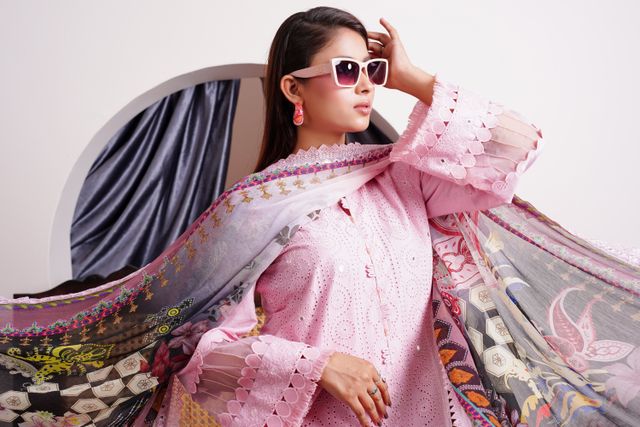
A boxy shirt can work with straight trousers or a modern shalwar when its width remains controlled. A longer straight shirt is more suitable for narrow or moderately wide trousers.
These designs show how modern cuts in Pakistani eastern wear can create variety through basic pattern proportions without requiring complicated decoration.
5. Revised Side Openings
Side openings are a familiar feature of Pakistani shirts, but their height and shape have changed with modern cuts.
Short shirts may use small openings or remain closed at the side. Medium and long shirts can use higher openings to provide space over wide trousers or shalwars.
The opening position should be decided according to the lower garment. A straight trouser does not require the same amount of space as a farshi or balloon shalwar.
Some contemporary shirts also use curved openings or front-and-back hems of slightly different lengths. These details should be reinforced and finished accurately because the top of the opening receives repeated pressure.
6. Updated Sleeve Shapes
Modern sleeves range from simple straight cuts to wide cuffs, dropped armholes and elbow-length designs. The most suitable sleeve depends on the width and shoulder construction of the shirt.
A loose shirt with drop shoulders often benefits from a straight or half sleeve. This keeps the upper section controlled and prevents unnecessary fabric from collecting around the arms.
Long straight shirts may use full sleeves with narrow cuffs or clean hems. Boxy shirts can support wider sleeves when the body width remains moderate.
Sleeve design should be treated as part of the pattern rather than an isolated detail. A sleeve that is too wide or too heavily decorated can interfere with the balance of the complete shirt.
7. Simplified Necklines
Contemporary Pakistani shirts frequently use clear, simplified necklines. Round necks, V-necks, narrow slits and banded openings are common because they work across plain, printed and embroidered fabrics.
The neckline often provides the main point of structure on a loose shirt. Even when the body is wide, the neck opening should retain its shape and remain properly positioned.
V-necklines create a defined centre front and are particularly effective on loose shirts and kaftans. Round necklines support buttons, piping, lace or a small slit without requiring extensive construction.
Embroidery may still be used, but modern designs often place it in a focused area rather than covering the complete front panel.
8. Redesigned Trousers and Shalwars
Changes in lower garments have had a major effect on modern cuts in Pakistani eastern wear. Straight trousers remain important, but they now appear alongside wide-leg trousers and several revised shalwar designs.
Balloon shalwars use a rounded body that narrows near the ankle. Tulip shalwars use curved overlapping panels, while modern farshi shalwars retain substantial width with more controlled proportions.
Each trouser design requires a suitable shirt. A full shalwar is usually clearer with a shorter shirt, while a straight trouser can support a longer kameez.
The complete Balloon Shalwar Guide explains how its rounded shape is created. The Farshi Shalwar Guide covers the construction and main forms of the wider traditional design.
9. Coordinated Outfit Construction
Modern eastern wear is increasingly designed as a complete set. The shirt and trousers may share the same print, colour or fabric, while three-piece suits coordinate the dupatta with both garments.
Co-ord sets require more than matching material. The width and length of the shirt must be planned with the trouser cut. If both pieces have substantial volume, one area should provide clearer structure.
A printed co-ord can use a short shirt with straight trousers, while a plain set can depend on fabric texture and tailoring. A three-piece suit may distribute print and embroidery across separate components rather than repeating the same detail everywhere.
This coordinated development is one of the clearest changes in contemporary ready-to-wear clothing.
Modern Trouser and Shalwar Construction
Straight Trousers
Straight trousers create a consistent line from the hip toward the ankle. They work with short, medium and long shirts, making them one of the most adaptable lower garments.
Their simple shape also supports shirts with stronger prints, embroidery or textured fabric.
Wide-Leg Trousers
Wide-leg trousers carry width from the upper leg toward the hem instead of narrowing at the ankle. The fabric distribution is more even than in a traditional shalwar.
These trousers work best when the shirt does not hide their complete shape. Short and medium-length tops are generally more effective than very long, wide shirts.
Balloon Shalwars
Balloon shalwars contain rounded volume through the leg and become narrower at the ankle. Gathers, pleats or curved pattern pieces may be used to create the required width.
A short loose-fit shirt keeps the balloon construction visible. The Light Pink Balloon Shalwar Two-Piece Set demonstrates this combination through a drop-shoulder shirt and rounded shalwar.
Tulip Shalwars
Tulip shalwars use curved panels that overlap at the front, side or lower leg. Their identity comes from panel construction rather than maximum volume.
The difference between the two modern shalwar forms is covered in the balloon shalwar vs tulip shalwar comparison.
Modern Farshi Shalwars
A farshi shalwar uses considerable fabric and a broad lower section. Modern versions may reduce the floor-length extension while retaining the width and distinctive structure.
Short kurtis and controlled shirts allow the farshi construction to remain visible. The overall outfit can therefore appear current without removing the defining features of the lower garment.
The Role of Fabric in Modern Cuts
Fabric determines whether a modern cut retains its intended shape. A boxy shirt needs enough body to maintain its straight hem, while a loose kaftan requires fabric that can fall evenly across a larger area.
Lawn supports lightweight shirts, printed suits and kaftans. Because it has less weight, neckline and side-opening finishes should remain stable.
Light khaddar provides more structure and works well for co-ord sets. It can maintain straight side seams and controlled loose fits without requiring heavy internal support.
Slub linen contributes visible texture and can support both plain and printed contemporary suits. Its weight should be considered when used in wide shirts or full trousers.
Dhanak is suitable for cooler-season two-piece suits and provides more body than lawn. Silk-based fabrics offer a smoother surface but require accurate cutting and seam finishing.
Further technical information about textile materials and construction is available through The Textile Institute.
Traditional and Modern Cut Comparison
| Garment feature | Traditional approach | Modern approach |
|---|---|---|
| Shirt length | Medium or long kameez | Short, medium, cropped-proportion or long |
| Shoulder | Regular shoulder seam | Regular or drop shoulder |
| Body width | Straight or shaped kameez | Boxy, loose-fit or controlled wide body |
| Sleeves | Straight or traditional regional variations | Half, elbow-length, dropped or cuffed sleeves |
| Side openings | Standard straight openings | Higher, shorter or curved openings |
| Trousers | Shalwar and regional lower garments | Straight, wide-leg, balloon and tulip designs |
| Coordination | Separate printed and plain components | Matching co-ords and fully planned sets |
| Surface detail | Broad embroidery or traditional print | Focused embroidery and controlled print placement |
Traditional and modern cuts can appear in the same outfit. A traditional farshi shalwar may be combined with a modern short shirt, while a contemporary co-ord can use khaddar or a print connected to established Pakistani textiles.
Examples from YASHAM®
YASHAM® uses modern cuts across several ready-to-wear categories. The Maroon Balloon Shalwar Two-Piece Set combines a loose-fit shirt with drop shoulders, half sleeves and a rounded lower garment.
The Off-White and Rust Printed Balloon Shalwar Three-Piece Set applies the same modern shalwar category to a coordinated printed outfit.
Co-ord construction can be seen in the Tangerine Bloom Light Khaddar Printed Set and the Plum Hour Light Khaddar Printed Co-ords Set.
The Blue Printed Kaftan for Women demonstrates how a long, loose garment can use full sleeves and a defined V-neckline. The Sky Blue Chikankari Two-Piece Suit represents a straighter contemporary suit with a long shirt and plain trousers.
Together, these products show that modern cuts in Pakistani eastern wear are not limited to one shirt or trouser shape.
Frequently Asked Questions
What makes a Pakistani shirt cut modern?
A modern Pakistani shirt may use a shorter length, boxy body, loose fit, drop shoulders, simplified neckline or revised side openings. The complete pattern matters more than any single decorative detail.
Are loose-fit shirts considered modern eastern wear?
Yes. Loose-fit shirts are common in contemporary eastern wear when their width, shoulders, sleeves and hems are deliberately controlled.
Why are short shirts used with modern shalwars?
Short shirts keep the shape and construction of balloon, tulip and farshi shalwars visible. A long shirt may cover the details that distinguish these lower garments.
Are drop shoulders suitable for Pakistani suits?
Drop shoulders can be used in Pakistani two-piece sets, co-ords and balloon-shalwar suits. Their depth should relate to the shirt and sleeve width.
Have straight trousers replaced traditional shalwars?
No. Straight trousers have expanded the available options, but traditional and redesigned shalwars remain important parts of Pakistani women’s clothing.
Can traditional fabrics be used with modern cuts?
Yes. Lawn, khaddar, linen, dhanak, silk and embroidered fabrics can all be used with contemporary patterns. The fabric weight should support the intended garment structure.
Final Overview
Modern cuts in Pakistani eastern wear are changing the relationship between shirts, trousers and shalwars. Shorter lengths, controlled loose fits, drop shoulders, simplified necklines and revised sleeve shapes have created more garment options without removing established eastern features.
Modern trouser construction has also expanded the category. Straight trousers, balloon shalwars, tulip shalwars and revised farshi designs require different shirt proportions and fabric distribution.
The strongest contemporary outfits maintain accurate construction and a clear relationship between all components. Modern design is therefore defined by pattern development, fit and coordination rather than by surface decoration alone.
Explore contemporary Pakistani designs through the YASHAM® online shop and view the wider collection on the official YASHAM® website. New products and collection updates are also shared through the official YASHAM® Instagram profile.