
Balloon Shalwar vs Patiala Shalwar: Which Style Has More Volume?
Balloon shalwar vs Patiala shalwar is mainly a comparison between rounded volume and pleated volume. A traditional full Patiala shalwar generally uses more total fabric because its construction depends on numerous deep pleats and overlapping folds. A balloon shalwar can look fuller around the middle of the legs, but its volume is usually shaped through tapering, panels, gathers or curved seams.
The answer therefore depends on how volume is measured. Patiala shalwar normally has more fabric and more folds. Balloon shalwar usually has a more obvious rounded leg shape. One produces volume through repeated pleating, while the other controls fabric to expand through the middle and narrow near the bottom.
Modern ready-to-wear versions can vary. A simplified Patiala may use fewer pleats, while a highly structured balloon shalwar may use considerable fabric. However, when traditional full versions are compared, Patiala shalwar generally has more total volume.
Table of Contents
- What is a balloon shalwar?
- What is a Patiala shalwar?
- Which shalwar has more volume?
- Seven important construction differences
- How volume appears on each design
- Fit and lower-leg structure
- Fabric requirements
- Modern Pakistani balloon shalwar designs
- Quality points to examine
- Frequently asked questions
What Is a Balloon Shalwar?
A balloon shalwar is a full lower garment that expands through the upper or middle legs before narrowing towards its lower opening. The rounded shape may be produced with curved side seams, panels, darts, controlled gathers or pattern tapering.
The waistband controls the fabric at the top. Below the waist, the pattern creates additional room through the legs. The garment then becomes narrower near the lower section, producing the rounded form associated with balloon trousers.
Modern balloon designs are commonly paired with loose-fit Pakistani shirts. Drop shoulders, half sleeves and simple necklines are often used to keep the shirt proportionate to the fuller lower garment.
The complete balloon shalwar guide explains its design, fit, construction and main Pakistani variations in greater detail.
What Is a Patiala Shalwar?
Patiala shalwar is a traditional Punjabi trouser identified by its numerous pleats and fabric folds. It is associated with Patiala in the Punjab region and is commonly paired with a shorter kurti.
Instead of relying mainly on a curved leg pattern, a Patiala shalwar creates fullness by arranging a large amount of fabric into pleats around the waist. These pleats continue through the garment and form layered folds across the legs.
The Patiala shalwar generally becomes narrower towards the ankles. Its lower opening may use a band or gathered finish, but its main identifying feature remains the repeated pleating rather than a rounded middle leg.
The Patiala salwar overview identifies it as an alternative form of the traditional Punjabi salwar suit. Academic garment-construction guidance also describes Patiala salwar as a modern salwar form with numerous folds originating from Patiala.
 Balloon Shalwar vs Patiala Shalwar: Which Has More Volume?
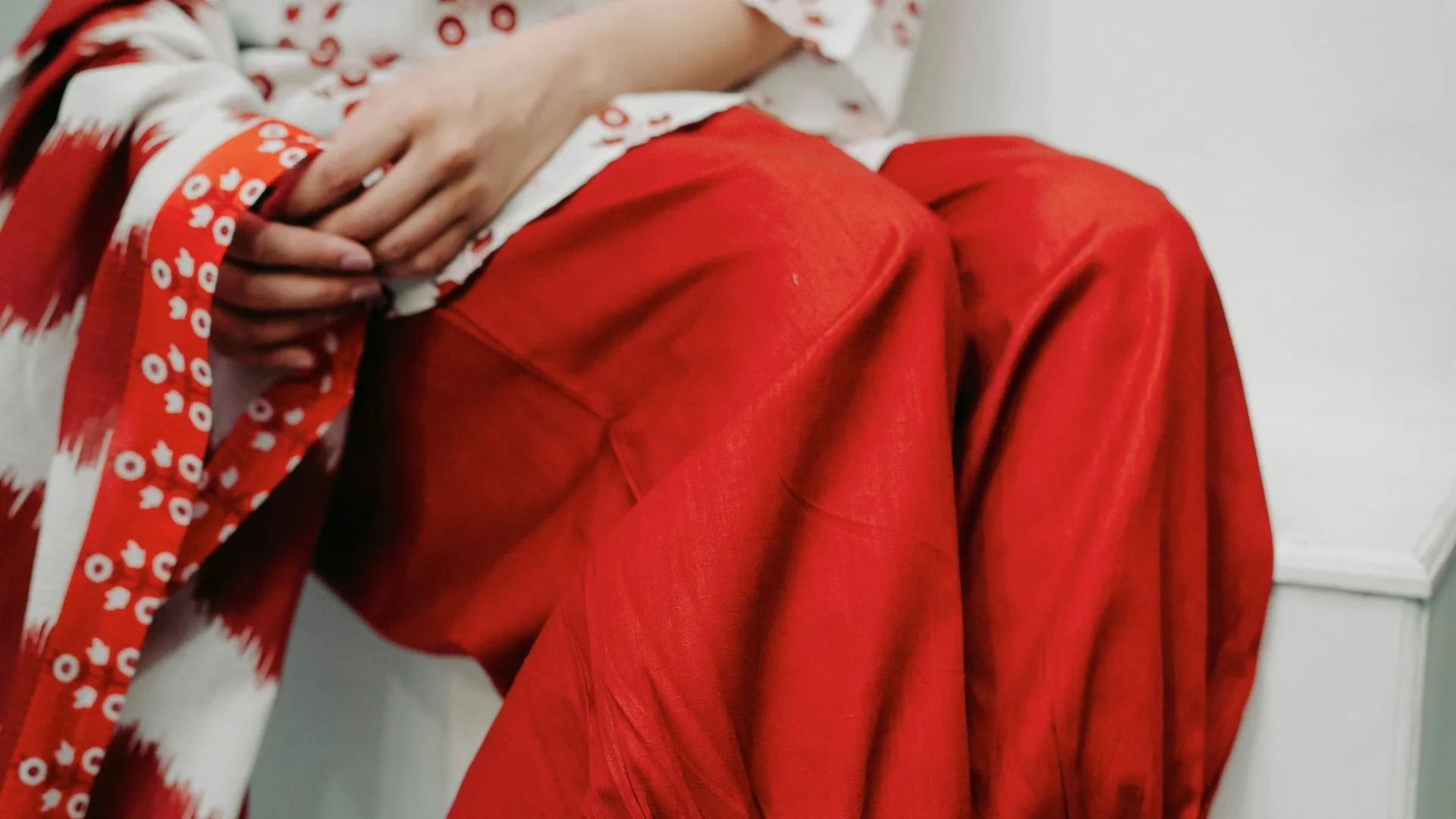
In a traditional full-cut comparison, Patiala shalwar usually has more volume because it uses more fabric across its many pleats. Each pleat contains folded material, so the garment may hold considerable width even when it does not look extremely broad from the front.
Balloon shalwar distributes volume differently. It concentrates width around the upper and middle legs before narrowing towards the hem. This can make the garment appear rounder and more prominent at the sides.
The distinction can be summarised clearly:
- Patiala shalwar has more pleated and layered volume.
- Balloon shalwar has more controlled, rounded volume.
- Patiala normally requires more total fabric.
- Balloon construction gives greater emphasis to the curved leg.
- Both become narrower towards the lower opening, but they use different pattern methods.
A reduced-pleat Patiala may contain less fabric than a very full balloon design. Product names alone are therefore not enough. The waistband, pleats, panels and leg pattern must be examined before comparing two individual garments.
7 Balloon Shalwar vs Patiala Shalwar Differences
| Comparison point | Balloon shalwar | Patiala shalwar |
|---|---|---|
| Main source of volume | Curved pattern, panels, gathers or tapering | Numerous deep pleats and overlapping folds |
| General leg shape | Rounded through the middle | Draped and folded through the complete leg |
| Fabric use | Moderate to high | Usually high in a traditional full version |
| Waist construction | Gathers, elastic, drawstring or waistband | Multiple pleats secured into the waistband |
| Lower section | Gradually narrows | Pleats continue before narrowing at the ankle |
| Surface appearance | Cleaner rounded shape | Visible folds and layered fabric |
| Common shirt pairing | Loose or relaxed shirt | Short Punjabi kurti |
1. Source of Volume
The first difference in balloon shalwar vs Patiala shalwar construction is how the fullness is formed. Balloon design uses the shape of the pattern itself. Curved seams, tapered sides and panels control where the leg becomes wider.
Patiala shalwar uses pleats as its primary construction method. Fabric is folded repeatedly at the waist, and these folds continue down the garment. The fullness comes from the quantity and depth of those pleats.
2. Amount of Fabric
A traditional Patiala usually requires more fabric because each pleat contains additional folded material. The garment can therefore have significant internal volume even when the folds sit close together.
Balloon shalwar also needs more material than a straight trouser, but its fabric is normally distributed through shaped panels or a wider leg pattern. It does not require the same number of overlapping folds.
This is why Patiala shalwar generally wins when volume is measured by total fabric consumption.
3. Leg Shape
Balloon shalwar has a clearly rounded leg. The garment becomes wide through its middle section before tapering towards the lower opening.
Patiala shalwar has a draped leg formed by folds. Its outer shape can look full, but the surface is defined by pleat lines rather than one continuous curve.
Current international balloon-trouser descriptions also define the design through an exaggerated leg that narrows into an elasticated or controlled ankle.
4. Waistband Construction
A balloon shalwar waistband may use elastic, a drawstring, gathers or fixed pleats. The purpose is to hold the upper fabric evenly while allowing the rounded leg to develop below.
A Patiala waistband must control numerous deep pleats. These pleats should be securely stitched and distributed consistently. Poor placement can produce heavy bulk on one side or cause the folds to sit incorrectly.
The educational guide on women’s salwar pattern development explains the general process of attaching leg panels to a waistband while incorporating pleats.
5. Surface Structure
Balloon shalwar normally has a cleaner outer surface. It may contain seams or light gathering, but its main feature is the rounded outline.
Patiala shalwar has visible folds across the front, sides and back. The fabric layers give it a denser surface and make the construction easier to identify.
Print can affect how these details appear. Busy motifs may reduce the visibility of pleats, while plain fabric makes the complete surface structure more obvious.
6. Lower-Leg Finish
Both garments become narrower near the bottom, but the transition is different. Balloon shalwar usually tapers gradually or uses a cuff to control its rounded leg.
Patiala shalwar carries its folds further down before bringing them into a narrow ankle finish. Fabric may collect more heavily above the lower band because the pleats continue through a larger part of the leg.
7. Shirt Proportion
Modern balloon shalwar is commonly paired with a loose-fit shirt. The shirt may use drop shoulders, half sleeves and a round or V-shaped neckline.
Patiala shalwar is traditionally paired with a shorter Punjabi kurti. The shorter length prevents the shirt from covering the detailed pleats and keeps the lower garment clearly visible.
Neither pairing is compulsory in modern clothing. However, the upper garment should not cover so much of the lower section that its identifying construction disappears.
 How Volume Looks on Each Shalwar
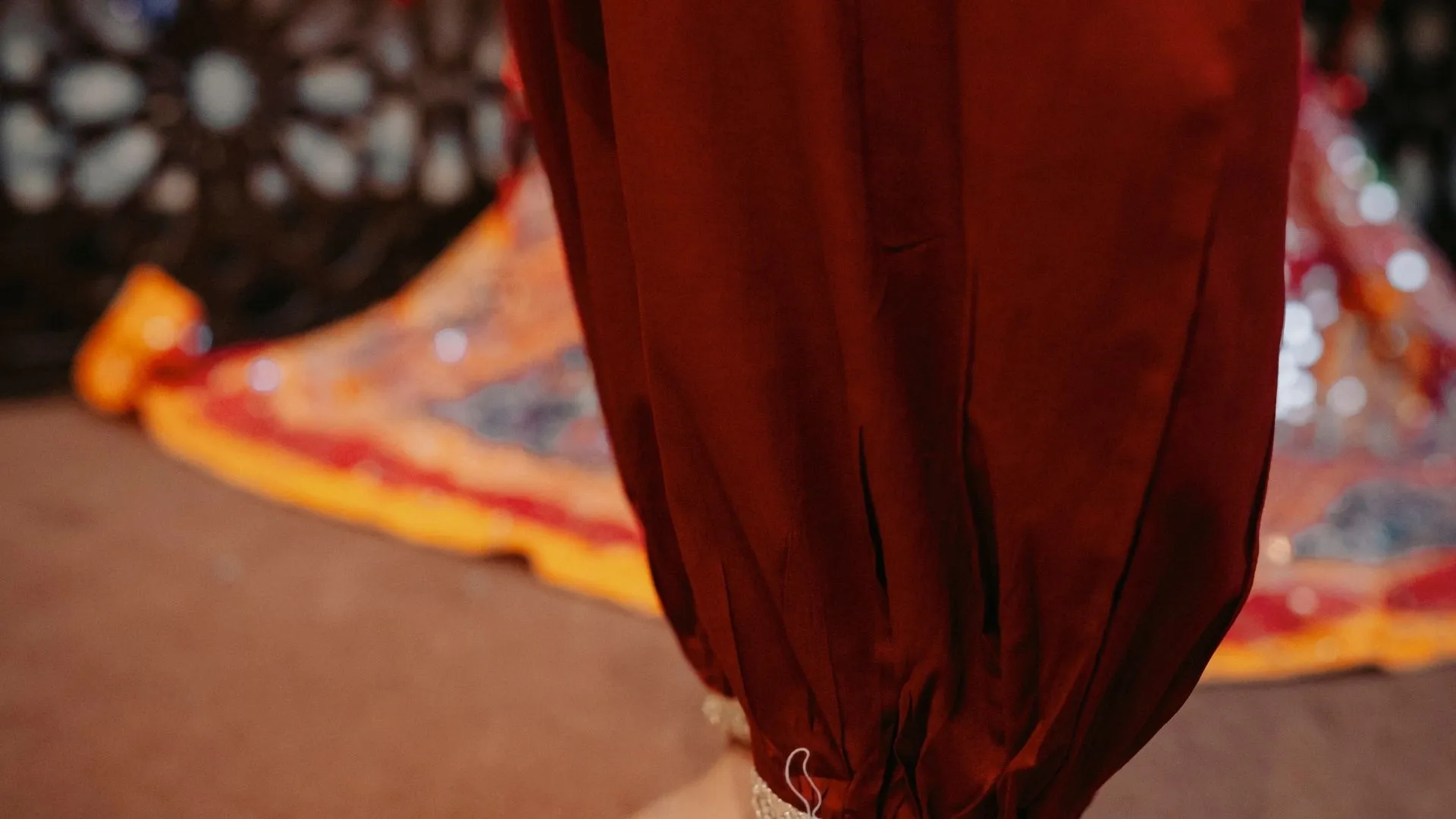
Balloon shalwar looks broadest around the upper or middle legs. The eye follows a curved line from the waist towards the widest section and then back into the narrower hem.
Patiala shalwar shows its volume through vertical and diagonal folds. The pleats create several layers, producing a more detailed and densely constructed appearance.
This difference explains why balloon shalwar can look larger in a front-facing product image even when a Patiala contains more fabric. Balloon volume extends outwards, whereas Patiala volume is partially folded into the garment.
Side and back photographs are useful when assessing either style. A balloon cut should remain rounded from multiple angles. A full Patiala should show consistent folds beyond the front waistband.
Balloon Shalwar vs Patiala Shalwar Fit
Balloon shalwar fit is relaxed through the legs but controlled at the waist and lower opening. The fabric should not pull tightly across the thighs because that would reduce the rounded shape.
Patiala shalwar also provides substantial leg room. However, its fit depends more heavily on pleat distribution. The folds need enough space to fall correctly without becoming compressed beneath the shirt.
Both garments require a secure waistband. Patiala construction can place additional fabric weight at the waist, while balloon construction may place more emphasis on curved side seams and the tapered lower leg.
Neither style should fit like a narrow trouser. Their identity depends on visible room and deliberate fabric volume.
How Fabric Changes the Volume
Soft cotton and lightweight blends allow Patiala pleats to form separate folds without becoming excessively stiff. A heavy fabric can make numerous pleats bulky around the waist.
Balloon shalwar needs enough structure to maintain its rounded shape. Very thin fabric may collapse unless the pattern contains sufficient width or shaping. Medium-weight cotton blends can provide more definition.
Silk and silk-like fabrics can work for both designs. In a Patiala, they produce softer folds. In a balloon shalwar, they create a less structured rounded leg.
Printed fabric also behaves differently across each garment. Patiala pleats divide and overlap motifs, while balloon panels may alter the direction of lines and borders. Print placement should therefore be planned for the actual pattern rather than treated as an afterthought.
Modern Pakistani Balloon Shalwar Designs
Pakistani balloon shalwar sets commonly combine a full lower garment with a loose shirt. Plain coordinated colours keep attention on the rounded leg and relaxed upper cut.
The maroon balloon shalwar two-piece set uses a loose-fit shirt with drop shoulders, half sleeves and a round neckline. Its plain finish allows the construction of both garments to remain visible.
The light pink balloon shalwar two-piece set uses a similar relaxed shirt format with a V-neckline. It demonstrates how neckline details can change while the balloon construction remains consistent.
A darker coordinated option is available through the navy blue balloon shalwar two-piece set. Printed designs can also use the same rounded lower shape, as shown by the off-white and rust printed balloon shalwar three-piece set.
These designs are not Patiala shalwars because their volume is not produced through numerous continuous pleats. Their identity comes from the rounded leg and controlled lower opening.
Quality Points to Examine
When reviewing a balloon shalwar, check whether both legs have equal width and consistent curves. Panel seams should remain flat, and the lower openings should match.
For Patiala shalwar, inspect the number, depth and placement of pleats. The folds should be secure at the waistband and distributed across the garment rather than concentrated unevenly.
The waistband on either style should sit flat and hold the fabric firmly. Printed designs should maintain a consistent motif direction where the pattern permits.
The final classification should match the construction. A garment with only a few shallow folds should not be described as a full Patiala, while a wide trouser without a tapered lower section should not be labelled balloon shalwar.
Frequently Asked Questions
Does Patiala shalwar always use more fabric than balloon shalwar?
A traditional full Patiala generally uses more fabric because of its numerous deep pleats. However, simplified Patiala designs may use less fabric than an especially full balloon cut.
Which style looks wider?
Balloon shalwar often looks wider around the middle legs because its pattern extends outwards. Patiala shalwar may contain more total fabric, but much of that fabric is folded into pleats.
Is balloon shalwar a modern version of Patiala shalwar?
No. They are separate constructions. Balloon shalwar focuses on a rounded leg, while Patiala shalwar is defined by repeated pleats and layered folds.
Do both styles narrow at the ankles?
Both can have controlled lower openings. Balloon shalwar usually tapers gradually or finishes with a cuff, while Patiala folds are brought into a narrow ankle band.
Can Patiala shalwar have a rounded appearance?
Its folds can create general fullness, but it does not normally have the clean curved leg associated with balloon shalwar. The pleats remain its primary feature.
Final Volume Comparison
The balloon shalwar vs Patiala shalwar comparison has two correct answers depending on the meaning of volume. Patiala shalwar generally contains more fabric and more folds. Balloon shalwar usually produces a rounder and more outwardly visible leg shape.
Patiala is the higher-volume garment when fabric consumption and layered pleating are measured. Balloon shalwar can appear broader because its fabric is shaped outwards instead of being folded repeatedly into the waistband.
Explore modern balloon shalwar sets through the YASHAM® online shop. Visit the official YASHAM® website for complete product details and follow YASHAM® on Instagram for product photographs and collection updates.