
Traditional vs Contemporary Pakistani Women’s Clothing
Traditional vs contemporary Pakistani clothing is not simply a comparison between old and new designs. Both categories are connected through familiar garments, regional textile practices and established forms of tailoring. The main differences appear in garment proportions, trouser construction, fabric combinations, embroidery placement and the way separate pieces are coordinated.
Traditional Pakistani women’s clothing includes numerous regional forms of shalwar, kameez, kurti, dupatta and long shirts. Contemporary clothing retains many of these elements but may adjust their length, width, fit and surface details. Modern collections also include kaftans, co-ord sets, shorter shirts, straight trousers and revised forms of farshi, balloon and tulip shalwars.
These categories frequently overlap. A traditional garment can use a modern print, while a contemporary suit can include hand embroidery or a historically established shalwar shape. A useful comparison should therefore examine construction and design rather than assuming that every garment belongs completely to one category.
Table of Contents
- What Is Traditional Pakistani Women’s Clothing?
- What Is Contemporary Pakistani Women’s Clothing?
- Traditional vs Contemporary Pakistani Clothing: Quick Comparison
- Nine Important Differences
- Traditional Elements in Contemporary Clothing
- Important Fabric Differences
- YASHAM® Traditional and Contemporary Designs
- Frequently Asked Questions
What Is Traditional Pakistani Women’s Clothing?
Traditional Pakistani women’s clothing refers to garments that are connected to established regional cuts, textile methods and forms of surface decoration. The broad category includes different versions of the shalwar kameez, farshi shalwar, Punjabi suit, kurti, dupatta and regionally specific dresses.
There is no single traditional Pakistani outfit. Clothing varies between Punjab, Sindh, Balochistan, Khyber Pakhtunkhwa and other regions. Shirt lengths, trouser widths, embroidery techniques and fabric preferences can all differ.
Traditional garments are often recognised through their construction. A farshi shalwar uses substantial fabric and an extended lower section. A Punjabi shalwar is generally wide at the top and narrows toward the ankle. A traditional kameez usually has clearly defined front and back panels with side openings.
Embroidery, block printing, weaving and other textile techniques also contribute to traditional clothing. UNESCO’s information about traditional craftsmanship explains the wider importance of craft knowledge, skills and production methods as forms of cultural heritage.
What Is Contemporary Pakistani Women’s Clothing?
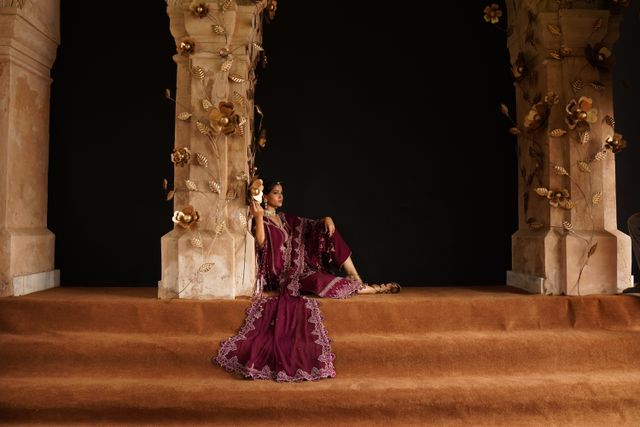
Contemporary Pakistani women’s clothing uses current cuts and production methods while retaining a clear relationship with eastern dress. It includes modern two-piece suits, three-piece sets, co-ords, kaftans, straight-cut outfits and suits with redesigned shalwars.
The word contemporary does not mean that the clothing has lost its cultural identity. A modern outfit may still use a kurti, shalwar or dupatta. Its updated character may come from a shorter shirt, drop shoulders, controlled loose fit, simplified embroidery or an alternative trouser cut.
Ready-to-wear production has also influenced contemporary design. Garments need consistent construction, clear proportions and fabrics that work across a planned collection. This has increased the use of coordinated sets in which shirts, trousers and dupattas are developed as one complete design.
The broader categories are explained in the YASHAM® guide to modern eastern wear for women, including kaftans, co-ord sets and contemporary suits.
Traditional vs Contemporary Pakistani Clothing: Quick Comparison
| Design element | Traditional Pakistani clothing | Contemporary Pakistani clothing |
|---|---|---|
| Main influence | Regional cuts and established garment forms | Updated proportions and current ready-to-wear design |
| Shirt shapes | Straight kameez, kurti and long shirt | Short, boxy, loose-fit and drop-shoulder shirts |
| Trouser designs | Shalwar, farshi shalwar and regional trousers | Straight trousers, co-ord trousers, balloon and tulip shalwars |
| Surface work | Hand embroidery, weaving and traditional prints | Focused embroidery, digital prints and simplified details |
| Outfit structure | Commonly two-piece or three-piece suits | Kaftans, co-ords, two-piece and three-piece sets |
| Fit | Varies by regional garment | More varied through relaxed, straight and structured cuts |
| Fabric use | Connected to region and established textile practices | Selected according to collection, season and garment cut |
| Coordination | May combine contrasting components | Frequently planned as a fully coordinated set |
The distinction between traditional vs contemporary Pakistani clothing is based on design direction rather than a strict separation. Many successful modern garments combine elements from both columns.
Nine Important Differences
1. Garment Structure
Traditional women’s clothing is usually built around recognised garment forms. A kameez has a front, back, sleeves, neckline and side openings, while a shalwar has a separate waistband, wide upper section and controlled ankle.
Contemporary clothing may simplify or modify these structures. A shirt can use an oversized body, drop shoulders or a shorter hem. A co-ord top may replace the traditional kameez, while a long kaftan may function as the main garment without a visible shalwar.
The basic construction remains important in both categories. The difference lies in how the pattern is adjusted and which proportions are emphasised.
2. Shirt Length
Traditional shirts vary in length, but long and medium-length kameez designs remain widely associated with the shalwar kameez. A traditional kurti may be shorter, particularly when paired with a fuller shalwar.
Contemporary shirts use a wider range of proportions. Short loose-fit tops, boxy shirts and upper-thigh-length kurtis are common with modern trousers and shaped shalwars.
Shirt length also affects how much of the lower garment remains visible. A shorter shirt can display the construction of a balloon, tulip or farshi shalwar, while a long straight shirt can support a narrower trouser.
3. Trouser and Shalwar Construction
The lower garment is one of the clearest differences in traditional vs contemporary Pakistani clothing. Traditional suits frequently use recognised shalwar forms that control fabric through pleats, gathers and ankle bands.
Contemporary suits may use straight trousers, wide-leg trousers, cigarette trousers or revised traditional shalwars. Balloon shalwars create rounded volume, while tulip shalwars use curved overlapping panels.
Modern designers may also adjust a traditional farshi shalwar by reducing its length or controlling its width. The garment remains connected to its original construction, but its proportions are adapted for a current ready-to-wear set.
The development and main types of this garment are discussed in the Farshi Shalwar Guide. The Balloon Shalwar Guide provides a similar overview of the modern rounded design.
4. Fit and Width
Traditional Pakistani clothing includes both fitted and loose garments. A kameez may be relatively straight, while different shalwars can use considerable fabric through the hips and legs.
Contemporary clothing applies width in more varied ways. A loose-fit shirt may be paired with a controlled trouser, or a straight shirt may be combined with a full balloon shalwar.
Modern fit does not automatically mean narrow or body-fitted. Many contemporary designs use generous width, but they manage it through drop shoulders, curved seams, controlled hems and planned fabric distribution.
The quality of the fit depends on whether the garment maintains its intended shape rather than on how close it sits to the body.
5. Fabric Selection
Traditional fabrics and textile practices often reflect regional climate, available fibres and established production methods. Cotton, silk, khaddar and woven or embroidered fabrics have long been important in Pakistani clothing.
Contemporary collections use many of the same materials while applying them to new garment categories. Lawn can be used for a straight two-piece suit or a printed kaftan. Light khaddar can support a matching co-ord set, while silk-based fabric can be developed into a modern three-piece outfit.
Fabric selection should relate to the cut. A wide kaftan requires a different weight from a fitted kameez, and a balloon shalwar needs material that can hold rounded volume without becoming excessively stiff.
Educational information about fibres, fabrics and textile production is available through The Textile Institute.
6. Print Development
Traditional prints may be connected to regional motifs, hand-block techniques or established colour combinations. Their value comes from the design as well as the knowledge involved in producing them.
Contemporary clothing also uses traditional motifs, but they may be resized, recoloured or arranged through modern printing methods. Digital printing allows patterns to be placed across long shirts, co-ord sets and kaftans with greater control.
The use of modern printing does not automatically make a garment unrelated to tradition. A contemporary print can still reference regional flowers, borders or geometric forms.
The important difference is how the print is developed and distributed across the garment pieces.
7. Embroidery Placement
Traditional embroidery may cover large areas or follow established regional techniques. It can be placed around the neckline, sleeves, front panel, hem or dupatta.
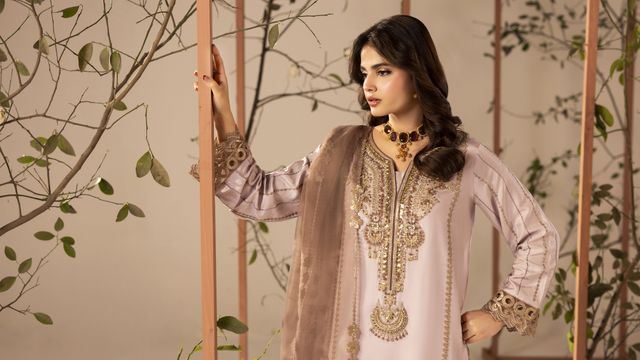
Contemporary suits often use more focused embroidery. A neckline may carry the main handwork while the rest of the shirt remains plain. Sleeve panels or narrow borders can provide additional detail without covering the complete garment.
This controlled placement helps the shirt cut and fabric remain visible. It can also reduce unnecessary weight on lightweight materials.
Hand embroidery continues to connect contemporary suits with traditional craft. The difference is frequently in placement and scale rather than the technique itself.
8. Outfit Coordination
Traditional suits may combine a plain shalwar with a printed shirt and contrasting dupatta. The separate pieces can have distinct designs while remaining part of one outfit.
Contemporary suits are often planned with stronger coordination. Co-ord sets may use the same print on the shirt and trousers. Three-piece suits may repeat a limited colour palette across all components.
Coordination does not require identical fabric on every garment. A contemporary set can use a textured shirt, plain trousers and printed dupatta while maintaining a consistent design direction.
Matching separates have become an important part of modern eastern wear because their proportions and fabrics are developed together.
9. Finishing and Ready-to-Wear Production
Traditional garments may be custom-stitched according to individual requirements. The tailor can adjust shirt length, shalwar width and neckline details for one wearer.
Contemporary ready-to-wear clothing requires consistent patterns and repeatable finishing. Shoulder seams, side openings, hems, sleeve lengths and trouser shapes need to remain uniform across production.
Ready-to-wear does not make a garment less connected to Pakistani clothing. It changes the production process and increases the importance of standard pattern development.
Clean finishing is essential in both categories. Uneven seams, poorly aligned prints and unstable necklines reduce garment quality regardless of whether the design is traditional or contemporary.
Traditional Elements in Contemporary Clothing
Contemporary Pakistani clothing frequently adapts traditional garments rather than replacing them. The farshi shalwar is one clear example. Its substantial width and distinctive lower shape can be combined with a shorter modern kurti.
Balloon shalwars also reflect the established use of loose trousers in regional clothing. Their rounded construction and narrow ankle are presented through simplified two-piece and three-piece sets.
Kaftans can incorporate Pakistani prints, neckline embroidery and regional colour combinations while retaining their long, loose construction. The complete structure is contemporary, but the fabric and surface details remain connected to eastern clothing.
Modern co-ords may use khaddar, lawn or linen fabrics already familiar within Pakistani suits. Their newer character comes from matching separates, shorter tops and updated trouser cuts.
This continued exchange is why traditional vs contemporary Pakistani clothing should not be treated as a choice between two unrelated categories.
Important Fabric Differences
Lawn
Lawn is commonly used for lightweight shirts and suits. Traditional lawn outfits may combine a printed shirt with plain trousers and a dupatta, while contemporary designs may use the same print across a complete co-ord set.
Khaddar
Khaddar provides greater body and is generally associated with cooler temperatures. It supports traditional straight shirts as well as modern loose-fit co-ords and printed three-piece suits.
Linen and Slub Linen
Linen and slub linen are useful for contemporary garments because their texture remains visible in both plain and printed designs. Fabric weight should be controlled when the shirt or trousers use substantial width.
Dhanak
Dhanak is suitable for structured two-piece suits in cooler weather. Its surface and weight can reduce the need for extensive decoration.
Silk-Based Fabrics
Silk and silk-based fabrics are used in both traditional and contemporary outfits. Traditional designs may include extensive embroidery, while a modern suit may use cleaner panels and focused surface work.
The use of the same fabric in both categories confirms that construction and design direction are often more important than the fibre name alone.
YASHAM® Traditional and Contemporary Designs
YASHAM® offers garments that represent both sides of the comparison. The Orange Punjabi Farshi Shalwar Two-Piece Set uses a kurti with a recognisable farshi shalwar construction.
The Purple Farshi Shalwar Two-Piece Set and Yellow Farshi Shalwar Two-Piece Set provide additional examples of traditional lower-garment forms presented as coordinated stitched sets.
Contemporary options include the Light Pink Balloon Shalwar Two-Piece Set and Maroon Balloon Shalwar Two-Piece Set. Both use a modern rounded shalwar with a loose-fit shirt.
The Tangerine Bloom Light Khaddar Printed Co-ord Set represents coordinated separates, while the Sea Green Printed Kaftan demonstrates a long one-piece category within modern Pakistani eastern wear.
These examples show how traditional garment references and contemporary cuts can appear within the same brand collection.
Frequently Asked Questions
What is the main difference between traditional and contemporary Pakistani clothing?
Traditional clothing is more directly connected to established regional garment forms, textile methods and cuts. Contemporary clothing uses updated proportions, coordinated separates and modern ready-to-wear construction while often retaining traditional elements.
Is shalwar kameez traditional or contemporary?
Shalwar kameez is an established traditional garment category, but it can also be contemporary. Shirt length, trouser shape, fabric and surface details determine whether a particular design has a more traditional or modern direction.
Can traditional embroidery be used on a contemporary suit?
Yes. Traditional embroidery can be placed on modern shirts, co-ord sets and three-piece suits. Contemporary designs often use it in focused areas such as the neckline, sleeves or front panel.
Are co-ord sets considered Pakistani eastern wear?
Co-ord sets can be considered eastern wear when their shirt cuts, trousers, fabrics and surface details are connected to Pakistani clothing. Matching separates are a modern format rather than a completely separate clothing tradition.
Are kaftans part of contemporary Pakistani clothing?
Kaftans are an important part of contemporary Pakistani clothing. Modern versions may use local prints, full sleeves, V-necklines and fabrics commonly found in women’s eastern wear.
Has contemporary clothing replaced traditional Pakistani suits?
No. Traditional and contemporary clothing continue to develop together. Modern collections frequently reinterpret traditional shirts, shalwars, fabrics and embroidery rather than removing them.
Final Comparison
Traditional vs contemporary Pakistani clothing is best understood as a comparison of construction, proportions and design direction. Traditional garments preserve established regional forms and textile practices, while contemporary clothing adjusts those elements for current cuts, coordinated sets and ready-to-wear production.
The two categories share many fabrics, garment names and surface techniques. Their differences are visible in shirt length, trouser shape, fit, print distribution and embroidery placement. A well-constructed outfit may include both traditional and contemporary features without weakening either influence.
Explore both categories through the YASHAM® online shop and view the wider collection on the official YASHAM® website. New designs and collection updates are also available through the official YASHAM® Instagram profile.