
Balloon Shalwar vs Tulip Shalwar: Shape and Fit Comparison
Balloon shalwar vs tulip shalwar is an important comparison for understanding two modern forms of Pakistani trousers. Both designs move beyond the construction of a basic straight shalwar, but they create their shape through different cutting and stitching methods.
A balloon shalwar has a full, rounded body that becomes narrower near the ankle. Its volume is distributed around the leg rather than concentrated only in front pleats. A tulip shalwar is identified by curved or overlapping panels that resemble the layered petals of a tulip. Depending on the pattern, this overlap may appear across the front, along the sides or near the lower leg.
These differences affect the fabric requirement, fit, shirt length and overall appearance of the completed suit. This guide provides a practical balloon shalwar vs tulip shalwar comparison based on garment construction rather than treating the names as interchangeable.

Table of Contents
- What Is a Balloon Shalwar?
- What Is a Tulip Shalwar?
- Balloon Shalwar vs Tulip Shalwar: Quick Comparison
- Seven Key Shape and Fit Differences
- Fabric Requirements and Suitability
- Suitable Shirt Designs
- Common Identification Mistakes
- Frequently Asked Questions
What Is a Balloon Shalwar?
A balloon shalwar is a loose trouser with noticeable fullness through the hips, thighs and lower legs. The fabric is controlled at the waist and becomes narrower at the ankle, producing its characteristic rounded shape.
The width may be created with gathers, pleats, curved seams or specially shaped pattern pieces. Some designs have a very full body, while others use moderate volume for a more controlled result. The ankle may be finished with a cuff, narrow band, elasticated section or fitted opening.
Unlike a standard straight shalwar, the balloon design is not defined mainly by front pleats. Its identity comes from the rounded leg construction and the contrast between the wide body and narrower ankle.
Balloon trousers have also received wider attention in contemporary fashion. The Financial Times has discussed the modern balloon-pant trend and its connection to traditional garments such as the Indian salwar and Turkish şalvar.
Readers can examine the garment in greater detail through the complete Balloon Shalwar Guide, which covers its construction, variations and modern Pakistani designs.
What Is a Tulip Shalwar?
A tulip shalwar is distinguished by curved panels that overlap or cross one another. These panels create a layered shape comparable to the petals of a tulip. The feature may be positioned at the front of the trousers, around the side seams or toward the lower leg.
Not every tulip shalwar uses exactly the same pattern. Some versions have two broad panels crossing over the front, while others use a smaller overlap below the knee. Certain designs are close to tulip trousers, whereas fuller versions may include elements associated with dhoti or wrap-style shalwars.
The defining feature is therefore not general looseness. It is the visible curved overlap or panel arrangement. A loose trouser without these panels should not automatically be described as a tulip shalwar.
Modern tulip-shaped trousers are also recognised by their controlled taper and shaped construction. Marie Claire describes contemporary tulip trousers as loose designs that taper toward the ankle and use pleating to create their recognisable form.
Balloon Shalwar vs Tulip Shalwar: Quick Comparison
| Design feature | Balloon shalwar | Tulip shalwar |
|---|---|---|
| Main identifying feature | Rounded, inflated leg shape | Curved overlapping panels |
| Volume distribution | Around most of the leg | Concentrated around panels and overlap |
| Front appearance | Usually gathered, pleated or plain | Layered, crossed or curved |
| Ankle construction | Narrow cuff, band or elastic | Tapered opening or overlapping hem |
| Fabric requirement | Usually moderate to high | Depends on panel width and overlap |
| Best visible angle | Front and side | Primarily front, sometimes side |
| Overall structure | Full and rounded | Layered and shaped |
The simplest balloon shalwar vs tulip shalwar distinction is that balloon shalwar depends on rounded volume, while tulip shalwar depends on overlapping construction. A design may contain elements of both, but one feature will normally be more visually dominant.
Seven Key Shape and Fit Differences
1. Rounded Shape Versus Overlapping Shape
The first difference between balloon shalwar and tulip shalwar is the method used to create the trousers’ outline. Balloon shalwar expands around the leg and then narrows toward the ankle. Its fullness can normally be seen from both the front and side.
Tulip shalwar creates its identity with curved fabric sections that cross or overlap. The design is therefore more dependent on panel placement than general width.
A balloon shalwar can be plain at the front and still retain its recognised form. A tulip shalwar requires a visible shaped overlap to communicate the intended design.
2. Fabric Distribution
Balloon shalwar fabric is distributed across the complete leg. Additional width may be placed at the centre front, back, side seams or throughout curved pattern pieces. This produces an even, rounded result.
Tulip shalwar fabric is directed into separate panels. One section usually sits over another, creating additional layers in specific areas. It may use less total volume than a full balloon shalwar, even though the overlapping sections require extra fabric.
This makes fabric placement more important than total fabric quantity when comparing balloon shalwar vs tulip shalwar.
3. Front Construction
The front of a balloon shalwar may contain gathers, controlled pleats or a comparatively plain upper section. These details manage the width entering the waistband, but they do not normally create a large crossing panel.
A tulip shalwar has a more recognisable front arrangement. Curved pieces may cross from one side to the other or form petal-shaped edges over an underlayer. Piping, lace or topstitching can be used to define these curved lines.
Because the front panels are a major design feature, accurate cutting and balanced overlap are particularly important in a tulip shalwar.
4. Leg Volume
A balloon shalwar generally carries more volume through the thigh and lower leg. Even moderately full versions maintain space between the fabric and the leg before narrowing at the ankle.
Tulip shalwar may be loose at the hip, but it usually looks more controlled below the knee. Its apparent width can change according to how far the panels overlap and whether the base trouser is straight, tapered or dhoti-inspired.
For customers comparing volume, balloon shalwar is normally the fuller option. Tulip shalwar directs attention toward panel shape rather than maximum width.
5. Ankle Finish
The ankle finish strongly affects how a balloon shalwar holds its shape. A narrow band or cuff collects the wider leg fabric and helps maintain the rounded construction. An elasticated ankle can produce a softer gathered finish.
Tulip shalwar often uses a tapered opening or overlapping lower edge. Some designs have a plain narrow hem, while others allow the curved outer panel to form the ankle detail.
The tulip ankle is therefore usually connected to the panel design. The balloon ankle mainly serves to control and contain the trouser’s volume.
6. Fit Through the Leg
Balloon shalwar has a loose fit through most of the leg. The fit becomes closer only near the ankle, depending on the cuff width. The main body should have sufficient space to maintain its rounded shape without pulling across the thighs.
Tulip shalwar may fit more closely beneath the overlapping sections. The base trouser can be relatively straight or tapered, while the outer panels provide additional coverage and shape.
In a balloon shalwar vs tulip shalwar fit comparison, the balloon design provides more continuous width. The tulip design combines a controlled trouser base with strategically placed layers.
7. Visual Detail
Balloon shalwar relies on volume as its primary design detail. Plain fabrics can display its construction clearly because the rounded shape remains visible without embroidery or print.
Tulip shalwar relies more heavily on seam direction, overlap and edge finishing. Contrasting piping, lace or a defined border can make the panel arrangement easier to recognise.
Printed fabric can be used for both designs. However, very busy prints may make the curved edges of a tulip shalwar less noticeable unless the panels include a defined finish.
Balloon Shalwar vs Tulip Shalwar Fabric Requirements
Fabric selection affects how both designs retain their intended shape. Cotton, lawn, linen blends, light khaddar and other woven materials can be used, depending on the season and required structure.
A balloon shalwar needs fabric that can hold rounded volume without becoming excessively stiff. Very heavy material may make the gathered sections bulky, while extremely thin fabric may reduce the definition of the shape.
A tulip shalwar requires sufficient stability around the panel edges. The overlap should remain visible instead of collapsing into irregular folds. Light to medium-weight woven fabrics are often practical because they support curved cutting and clean edge finishing.
Printed fabrics should also be considered during cutting. On a tulip shalwar, large motifs may become interrupted where the panels cross. On a balloon shalwar, the print may appear denser where fabric is gathered at the waist or ankle.
Suitable Shirt Designs for Balloon and Tulip Shalwar
Short shirts are suitable for both designs because they keep the main trouser construction visible. However, the most effective shirt cut can differ slightly.
A balloon shalwar works well with a short loose-fit shirt, straight kurti or controlled drop-shoulder design. Because the trousers already contain substantial width, the shirt should not introduce excessive volume.
A tulip shalwar can support a short straight shirt, fitted kurti or moderately loose top. The shirt should finish above the main overlap so that the curved panels remain visible.
Medium-length shirts may be used when they have suitable side openings. A long narrow shirt can conceal the defining details of both styles, particularly the upper volume of a balloon shalwar and the front panels of a tulip shalwar.
For a complete breakdown of suitable upper garments, read the guide to the best shirt designs for balloon shalwar.
Which Design Uses More Volume?
Balloon shalwar normally uses more visible volume because the fullness continues around most of the leg. Its width is an essential part of the design rather than an additional decorative feature.
Tulip shalwar can also use a considerable amount of fabric, particularly when the panels are broad or the base is dhoti-inspired. However, much of that fabric is placed in overlapping layers rather than distributed evenly around the leg.
The final fabric requirement depends on garment measurements, fabric width, panel depth and the desired fullness. Nevertheless, a full balloon shalwar will usually appear wider than a standard tulip shalwar.
This is similar to the distinction discussed in the comparison of balloon shalwar and Patiala shalwar, although a Patiala design creates fullness through multiple pleats instead of tulip-shaped overlaps.
Common Identification Mistakes
One common mistake is describing every tapered loose trouser as a balloon shalwar. Tapering alone is not sufficient. A balloon shalwar should have noticeable rounded volume between the waist and ankle.
Another mistake is calling any trouser with front pleats a tulip shalwar. Standard pleats do not create a tulip design unless curved or overlapping sections form the recognisable petal-like shape.
Dhoti shalwar and tulip shalwar may also be confused. Some patterns combine features of both, but a dhoti design usually depends on deeper draping and fabric crossing through the upper leg. A tulip shalwar can be constructed on a simpler trouser base with shaped outer panels.
Product photography should show the front, side and lower-leg construction clearly. A single front image may not fully explain the volume of a balloon shalwar, while a side-only image may hide the defining overlap of a tulip design.
YASHAM® Balloon Shalwar Designs
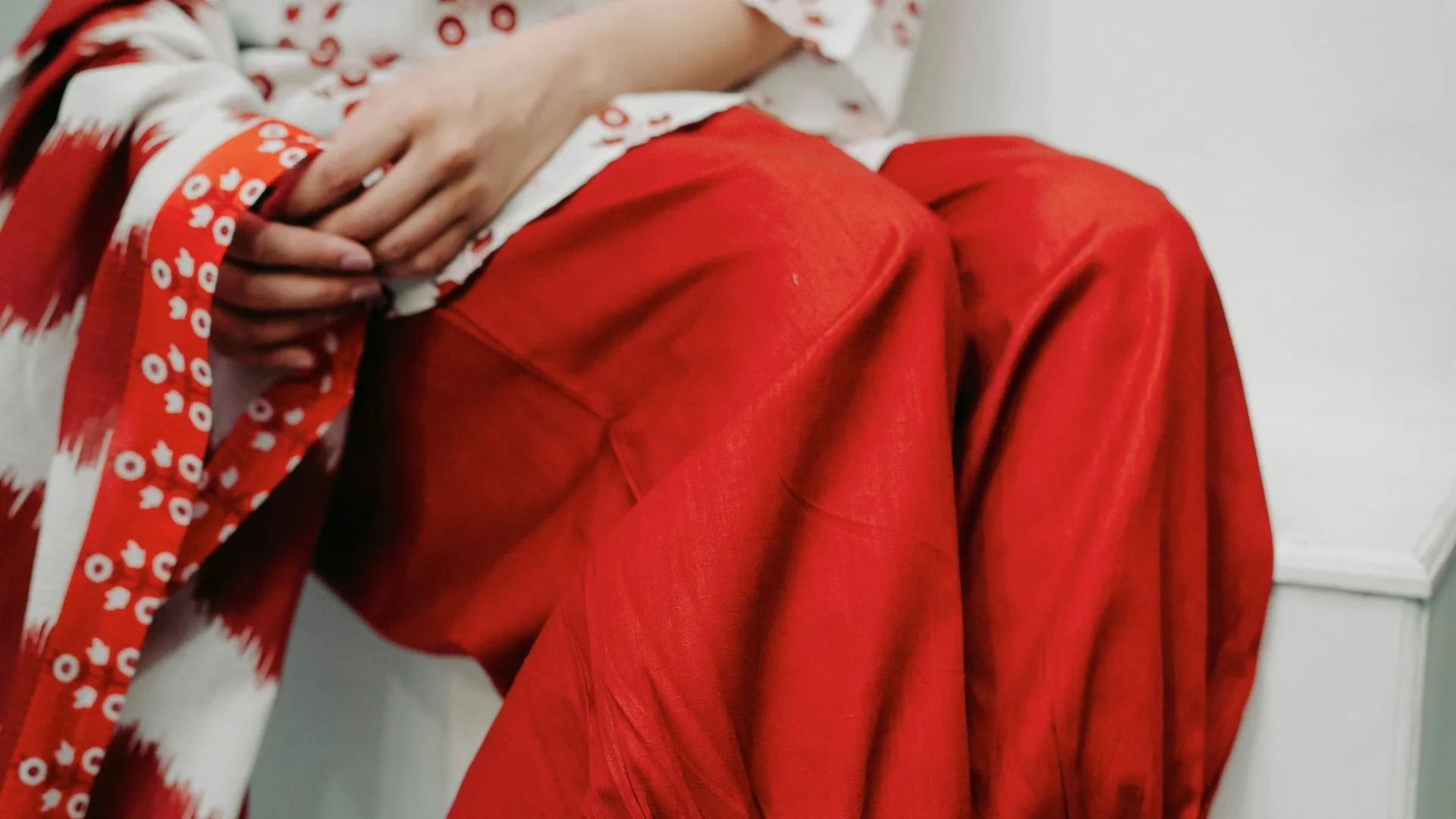
YASHAM® offers modern balloon shalwar sets that demonstrate how rounded trousers can be combined with clean shirt construction. The Light Pink Balloon Shalwar Two-Piece Set combines a loose-fit shirt with a coordinated balloon shalwar.
The Maroon Balloon Shalwar Two-Piece Set provides a plain coordinated option with a full rounded lower design. A darker colour is available through the Navy Blue Balloon Shalwar Two-Piece Set.
For customers interested in a printed design, the Off-White and Rust Printed Balloon Shalwar Three-Piece Set combines the rounded shalwar shape with coordinated printed fabric.
Frequently Asked Questions
What is the main difference between balloon shalwar and tulip shalwar?
Balloon shalwar is defined by rounded volume that narrows at the ankle. Tulip shalwar is defined by curved panels that overlap like tulip petals. One focuses on overall leg volume, while the other focuses on layered construction.
Is tulip shalwar less voluminous than balloon shalwar?
A standard tulip shalwar usually appears less voluminous because its additional fabric is concentrated in overlapping panels. A balloon shalwar distributes width around most of the leg and normally produces a fuller shape.
Does a tulip shalwar always have overlapping front panels?
Most tulip shalwars have a visible overlap, but its placement can vary. The curved panels may cross at the front, extend from the sides or overlap near the lower leg.
Can balloon shalwar have front pleats?
Yes. Front pleats can be used to control fabric entering the waistband. However, the finished trousers should still have a rounded body and narrower ankle to be identified as balloon shalwar.
Which fabric is suitable for both designs?
Light to medium-weight woven fabrics such as lawn, cotton and suitable linen blends can support both designs. The fabric should be stable enough to retain the tulip panels while remaining suitable for the gathered or curved construction of a balloon shalwar.
Final Balloon Shalwar vs Tulip Shalwar Comparison
The balloon shalwar vs tulip shalwar comparison is primarily a difference between rounded volume and overlapping panels. Balloon shalwar has a fuller body, continuous width through the leg and a controlled ankle. Tulip shalwar uses curved layers to create a more structured front or lower-leg design.
Neither name should be applied only because a trouser is loose or tapered. Examining the panel construction, fabric distribution and ankle finish provides a more accurate way to identify each design.
Readers can explore additional Pakistani suits through the YASHAM® online shop and learn more about the brand’s collections on the official YASHAM® website. New articles, product releases and collection updates are also shared through the official YASHAM® Instagram profile.