
Modern Eastern Wear for Women: Kaftans, Co-ord Sets and Contemporary Suits
Modern eastern wear for women combines recognisable Pakistani clothing with updated cuts, coordinated fabrics and practical garment construction. Kaftans, matching co-ord sets and contemporary suits have become important parts of this category because they retain eastern design elements while offering more varied shapes than a basic shalwar kameez.
The category now includes long printed kaftans, loose two-piece sets, short shirts with modern shalwars, straight-cut suits, embroidered three-piece outfits and coordinated separates. These designs differ in structure, fabric requirement and fit, but they share an emphasis on clear construction and complete outfit coordination.
Understanding these differences helps customers compare garments based on more than colour or print. Shirt length, shoulder placement, trouser shape, fabric weight, neckline finishing and the balance between plain and printed components all contribute to the quality of modern Pakistani clothing.
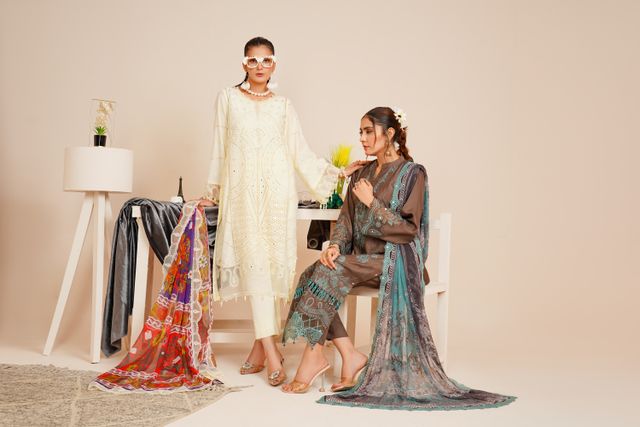
Table of Contents
- What Is Modern Eastern Wear for Women?
- How Modern Eastern Wear Has Developed
- Modern Kaftans for Women
- Women’s Co-ord Sets
- Contemporary Pakistani Suits
- Nine Important Modern Eastern Wear Designs
- Comparison of Kaftans, Co-ords and Suits
- Important Fabrics in Modern Eastern Wear
- Fit and Construction Details
- Print, Embroidery and Surface Details
- Choosing Modern Eastern Wear
- Frequently Asked Questions
What Is Modern Eastern Wear for Women?
Modern eastern wear for women refers to garments that use Pakistani or wider South Asian clothing principles in updated forms. These garments may retain a traditional kameez, shalwar, kurti or dupatta while changing the length, width, trouser construction, neckline or fabric coordination.
Modern does not necessarily mean westernised. A garment can remain clearly connected to Pakistani clothing while using a shorter shirt, dropped shoulders, a straight trouser, an overlapping hem or a coordinated printed set.
The term covers several product categories. A printed long kaftan provides a one-piece option, while a co-ord set uses separate upper and lower garments in a planned combination. Contemporary suits may contain two or three pieces and can feature traditional or modern trouser designs.
The strongest designs maintain a clear relationship between appearance and construction. A garment should not depend only on decoration to appear modern. Its cut, fit and proportions should also support the intended design.
How Modern Eastern Wear Has Developed
Pakistani women’s clothing has always included regional differences in shirts, trousers, fabrics and surface techniques. Modern collections continue this variety by adapting familiar garments for current ready-to-wear requirements.
Straight shirts have been joined by shorter kurtis, boxy tops, drop-shoulder shirts and loose-fit designs. Traditional shalwars now appear alongside cigarette trousers, wide-leg trousers, balloon shalwars, tulip shalwars and revised farshi shalwars.
Matching separates have also become more important. Instead of treating the shirt and trousers as unrelated items, co-ord sets use a shared colour, print or fabric direction. This produces a complete design without requiring heavy decoration.
Kaftans have developed in a similar way. Contemporary versions may include V-necklines, full sleeves, side openings, printed panels or controlled width through the body. These changes make the kaftan an important category within modern eastern wear for women rather than a separate garment with only one standard shape.
Modern Kaftans for Women
A kaftan is generally constructed as a loose, long garment with an extended body and generous sleeve area. Modern Pakistani kaftans may have separate sleeves, shaped shoulders, side seams or panels that provide greater control than a basic rectangular cut.
Long Printed Kaftans
Printed kaftans use the garment’s large surface area to display floral, geometric or abstract patterns. Print placement is particularly important because a large motif can become interrupted at the neckline, sleeve seam or centre front.
A successful printed kaftan should maintain clear pattern distribution from the shoulders to the lower hem. Borders may be placed along the neckline, sleeve openings or garment edges, but they should support the main print rather than divide it into too many sections.
The Blue Printed Kaftan for Women from YASHAM® combines a long kaftan cut with full sleeves and a V-neckline. The Sea Green Printed Kaftan for Women provides another example of a coordinated printed design.
Structured Kaftans
Not every kaftan needs maximum width. A structured kaftan uses controlled side seams, a defined shoulder or carefully positioned panels to manage the amount of fabric.
This design can retain the recognisable long kaftan form without becoming unnecessarily wide. Fabric selection is important because material that is too stiff may make the garment project outward, while fabric that is too thin may weaken the neckline and shoulder construction.
Necklines and Sleeves
V-necklines create a defined centre-front detail and work well on printed kaftans. Round and banded necklines can also be used, provided their finishing remains stable across the wider garment body.
Full sleeves are common, but their width should relate to the overall kaftan cut. A garment with a very wide body may require simpler sleeves, while a narrower kaftan can support more sleeve detail.
These construction decisions allow kaftans to remain a distinct and practical part of modern eastern wear for women.
Women’s Co-ord Sets
A co-ord set consists of separate garments designed to work together through matching or related fabric. In Pakistani clothing, the combination usually includes a shirt and trousers, although jacket-based and three-piece co-ords are also possible.
The main advantage of a co-ord set is design consistency. The print scale, colour distribution, fabric weight and proportions can be planned across both pieces from the beginning.
Printed Co-ord Sets
Printed co-ords may use the same pattern on the shirt and trousers or distribute related patterns across both garments. When the same print is used throughout, the shirt and trouser cuts should remain clear enough to prevent the design from appearing visually crowded.
A short shirt with straight trousers creates a defined separation between the two garments. A loose shirt can also work when its hem, neckline and sleeves provide enough structure.
The Tangerine Bloom Light Khaddar Printed Co-ords Set demonstrates how one print direction can be carried across a complete two-piece outfit. The Plum Hour Light Khaddar Printed Co-ords Set provides a darker printed alternative within the same category.
Plain and Minimally Printed Co-ords
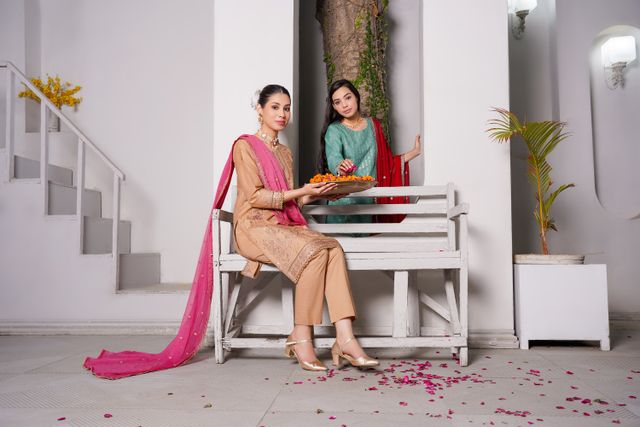
Plain co-ords depend more heavily on tailoring because there is no strong print to distract from the garment structure. Shoulder seams, neckline finishing, sleeve shape, trouser width and hem alignment therefore become more visible.
A plain co-ord can use contrast piping, buttons or restrained embroidery to define the design. However, these details should not replace accurate construction.
The Forest Whisper Khaddar Co-ord Set represents a coordinated two-piece format based on fabric, colour and consistent garment proportions.
Co-ord Shirt and Trouser Shapes
Co-ord shirts may be short, medium-length, straight, boxy or loose fitting. Trousers can be straight, wide, tapered or shaped through panels.
When both garments have considerable width, the outfit requires clear control at the shoulder, waist or ankle. When one garment is fuller, the other can use a straighter cut to establish better proportion.
This flexibility makes co-ords one of the broadest categories within modern eastern wear for women.
Contemporary Pakistani Suits
Contemporary Pakistani suits retain the familiar structure of a shirt with trousers and, in many cases, a dupatta. Their modern character comes from updated cuts, fabrics, trouser forms and surface details.
The category includes stitched two-piece suits, printed three-piece suits, embroidered outfits, coordinated plain sets and redesigned traditional shalwar suits.
Modern Two-Piece Suits
A modern two-piece suit usually contains a shirt and trousers. The shirt may be straight, long, short or loose fitting, while the trousers can range from a basic straight cut to a more distinctive shalwar design.
Two-piece suits allow the cut and fabric to remain the main focus. Because there is no dupatta to provide an additional design layer, the shirt and trousers need a strong visual relationship.
The Sky Blue Chikankari Two-Piece Suit combines a long shirt with plain trousers. The contrast between textured chikankari fabric and a simpler lower garment keeps the construction clear.
Modern Three-Piece Suits
Three-piece suits normally include a shirt, trousers and dupatta. Their design requires coordination across three separate components, which may use the same colour family or a combination of plain and printed fabrics.
A printed shirt can be combined with plain trousers and a coordinated dupatta. Alternatively, a plain or embroidered shirt may be supported by a printed dupatta. The strongest combinations assign a clear function to each component instead of placing equally strong detail across all three.
The Pista Blush Khaddar Three-Piece Printed Suit demonstrates the use of coordinated print in a seasonal fabric. The Camel Charm Slub Linen Three-Piece Printed Suit provides another example based on the texture of slub linen.
Embroidered Contemporary Suits
Embroidery can be used to define the neckline, sleeves, front panel or hem. Modern embroidered suits often use focused placement rather than applying equal embroidery across every part of the garment.
This approach keeps the fabric and cut visible. It also allows handwork to function as a construction-related detail around areas such as necklines, cuffs and panel seams.
The Lime Bloom Hand-Embroidered Three-Piece Suit represents a contemporary suit in which hand embroidery forms an important part of the overall design.
Nine Important Modern Eastern Wear Designs
1. Long Printed Kaftan
The long printed kaftan provides a complete one-piece design with an extended body, full sleeves and a defined neckline. Print placement and fabric weight are central to its quality.
2. Structured Plain Kaftan
A structured kaftan uses controlled width and clearer seams. Its modern appearance comes from the garment’s cut rather than extensive decoration.
3. Matching Printed Co-ord Set
A printed co-ord repeats or coordinates patterns across the shirt and trousers. Accurate print distribution keeps the individual garment sections visible.
4. Plain Two-Piece Co-ord
A plain co-ord relies on colour, fabric texture and tailoring. Clean neckline, shoulder and trouser construction are especially important in this design.
5. Short Shirt with Modern Shalwar
Short shirts can be combined with balloon, tulip or revised farshi shalwars. The shorter upper garment keeps the construction of the trousers visible.
The difference between these lower garments is explained further in the Balloon Shalwar Guide and the complete Farshi Shalwar Guide.
6. Straight Two-Piece Suit
A straight shirt and trouser combination provides a clean contemporary structure. The shirt can be long or medium in length, depending on the trouser width and side openings.
7. Printed Three-Piece Suit
This category coordinates a shirt, trousers and dupatta through print and colour. One component should normally carry the dominant print while the others support it.
8. Hand-Embroidered Suit
Hand-embroidered suits use detailed surface work around selected garment areas. Fabric quality and stitch placement are essential because embroidery adds weight and structure.
9. Modern Fabric-Based Suit
In this category, the fabric creates much of the outfit’s identity. Chikankari, khaddar, dhanak, slub linen, lawn and silk each produce a different surface and garment structure.
Together, these categories show the range available within modern eastern wear for women without treating every design as a variation of the same basic suit.
Comparison of Kaftans, Co-ords and Suits
| Feature | Kaftans | Co-ord sets | Contemporary suits |
|---|---|---|---|
| Basic construction | One long primary garment | Two coordinated separates | Two or three coordinated pieces |
| Common shirt length | Full or near-full length | Short to medium | Short, medium or long |
| Lower garment | Usually not separate | Matching trousers or shalwar | Trousers or shalwar |
| Main design focus | Print, neckline and garment width | Coordination between separates | Balance across all suit components |
| Common fabrics | Lawn, cotton blends and light woven fabrics | Lawn, khaddar, linen and blends | Lawn, khaddar, dhanak, linen and silk |
| Fit options | Loose or controlled loose fit | Straight, boxy or relaxed | Straight, fitted or loose |
| Surface details | Prints, borders and neckline work | Matching prints, piping or buttons | Prints, embroidery, lace and panels |
This comparison shows that modern eastern wear for women cannot be evaluated through colour alone. Each category has different construction requirements and should be assessed according to its intended cut.
Important Fabrics in Modern Eastern Wear
Lawn
Lawn is a lightweight woven fabric widely used for Pakistani suits. It supports printed shirts, two-piece sets and three-piece outfits while remaining suitable for warmer weather.
Because lawn is relatively light, neckline and side-seam finishing need sufficient stability. Printed lawn also requires accurate cutting so motifs and borders appear correctly on the completed garment.
Khaddar and Light Khaddar
Khaddar has a more substantial surface than lawn and is commonly used for cooler seasons. It can support straight shirts, co-ord sets and printed three-piece suits.
Light khaddar offers a less heavy alternative while retaining a visible woven texture. It works particularly well for coordinated separates because the fabric can maintain a defined shirt and trouser shape.
Linen and Slub Linen
Linen and linen blends provide visible texture and support contemporary cuts. Slub linen contains natural-looking variations in the yarn, giving the fabric a more textured surface.
These fabrics can work in printed or plain suits. Their weight should be considered carefully because heavier linen can add unnecessary bulk to wide shirts or full shalwars.
Dhanak
Dhanak is generally associated with cooler weather and provides more body than lightweight summer fabrics. It can be used for simple two-piece suits where the fabric itself contributes to the design.
The Pearl Mist Dhanak Two-Piece Suit and Midnight Black Dhanak Two-Piece Suit demonstrate how this fabric can be used in coordinated winter clothing.
Silk and Silk-Based Fabrics
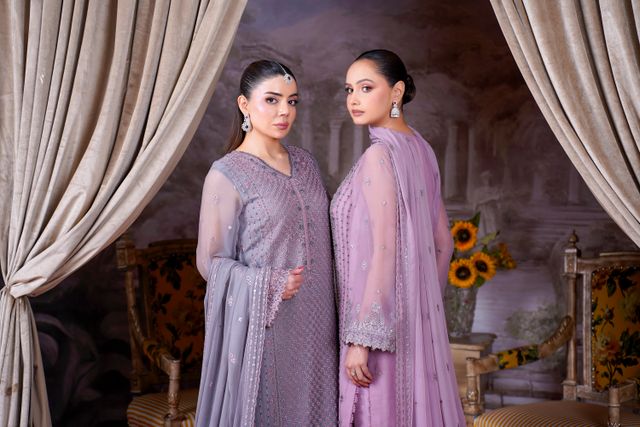
Silk-based fabrics have a smoother surface and may reflect more light than cotton or khaddar. They require controlled seams and careful panel placement because stitching irregularities can be more visible.
The Pearl Grace Korean Silk Three-Piece Suit is an example of a contemporary three-piece design based on a smooth silk fabric.
Customers interested in textile terminology and responsible fibre production can consult educational resources from The Textile Institute and Better Cotton. These clean external resources provide broader information about textiles and cotton production.
Fit and Construction Details
Shoulder Placement
Shoulders determine how the upper garment sits across the body. Regular shoulder seams create a more defined fit, while drop shoulders produce a wider and more relaxed shirt.
Drop shoulders work particularly well on loose co-ord shirts and modern balloon-shalwar sets. However, the drop should remain controlled so that the sleeve and upper body do not become unnecessarily wide.
Shirt Width
A loose shirt should provide adequate room without losing its intended shape. Width should be assessed together with the garment length, shoulder construction and trouser design.
A short loose shirt can work with a full shalwar, while a long shirt usually benefits from straighter side seams. Wide shirts with heavily flared trousers may make both components less distinct.
Side Openings
Side openings affect both fit and access to the trouser design. High side openings allow a medium or long shirt to sit over wider trousers without restricting them.
Lower side openings are suitable for straight trousers but may not provide enough space for balloon or farshi shalwars. The opening position should therefore relate to the lower garment.
Trouser Construction
Straight trousers create a clean vertical shape and are suitable for many two-piece and three-piece suits. Wide-leg trousers distribute fabric more evenly, while balloon shalwars concentrate volume between the waist and ankle.
Tulip shalwars use curved overlapping panels, and farshi shalwars rely on considerable width and an extended lower shape. Each construction changes the proportion of the complete outfit.
Hem and Edge Finishing
Clean hems are important on kaftans, shirts and trousers because modern designs often use simplified cuts. Piping, lace and narrow borders can define edges, but the underlying stitching must remain even and secure.
In modern eastern wear for women, quality is often visible through these smaller construction details rather than through the amount of decoration.
Print, Embroidery and Surface Details
Print scale should relate to garment size. Large motifs have more space on long kaftans and extended shirts, while smaller repeated prints can work effectively on coordinated shirts and trousers.
Placement is particularly important when a garment contains panels, side openings or an overlapping neckline. Important motifs should not be cut in a way that makes the design appear incomplete.
Embroidery requires similar planning. Neckline embroidery should follow the shape of the opening, while sleeve embroidery should remain aligned across both arms. Heavy work may require supporting fabric to prevent the main material from losing its shape.
Buttons, lace and piping can provide useful definition when applied in limited areas. Combining several strong details in one garment may hide the quality of the original cut.
Professional modern eastern wear for women uses decoration to support the garment rather than compensate for weak construction.
Seasonal Suitability
Fabric weight is the main factor that determines seasonal suitability. Lawn, lightweight cotton and suitable blends are generally more appropriate for warmer temperatures because they have less body and weight.
Khaddar, light khaddar and dhanak are more substantial and work better when additional warmth is required. Linen blends can vary considerably, so their density should be assessed rather than assuming every linen fabric has the same seasonal use.
Silk-based fabrics also vary in weight. A lightweight silk blend may be suitable in moderate temperatures, while a heavier silk construction provides greater structure.
Sleeve length, garment width and layering also affect the final result. However, fabric composition and weight remain more reliable indicators than colour or print.
Choosing Modern Eastern Wear
When comparing modern eastern wear for women, begin with the garment category. Decide whether the design is intended to function as a one-piece kaftan, a coordinated two-piece set or a complete three-piece suit.
Next, examine the fabric. It should support the intended cut without appearing too stiff or losing all structure. A full kaftan requires different fabric behaviour from a straight shirt, and a balloon shalwar needs different weight distribution from a basic trouser.
Construction should then be reviewed through the neckline, shoulders, sleeve attachment, side seams and hems. These areas show whether the garment has been assembled accurately.
Finally, consider how prints and surface details are distributed. Strong design does not require every component to carry equal decoration. A clear balance between plain, printed and embroidered sections generally produces a more organised complete outfit.
Frequently Asked Questions
What is included in modern eastern wear for women?
The category includes kaftans, co-ord sets, two-piece suits, three-piece suits, embroidered outfits, straight-cut suits and garments featuring updated shalwar designs. These products retain eastern clothing elements while using current cuts and fabric combinations.
What is the difference between a co-ord set and a two-piece suit?
A co-ord set is designed around closely matching separates, often using the same print, colour or fabric across both pieces. A two-piece suit is a broader category and may combine contrasting fabrics, a decorated shirt with plain trousers or different garment structures.
Are kaftans considered eastern wear?
Yes. Kaftans have a long history across several clothing traditions and remain an established part of eastern and modest fashion. Pakistani versions commonly use local prints, neckline details, full sleeves and fabric suitable for regional seasons.
Which fabrics are commonly used for contemporary Pakistani suits?
Lawn, cotton, khaddar, light khaddar, linen, slub linen, dhanak, chikankari and silk-based fabrics are commonly used. The appropriate fabric depends on the garment cut, required structure and season.
Can traditional shalwars be part of modern eastern wear?
Yes. Balloon shalwars, tulip shalwars and redesigned farshi shalwars can be incorporated into modern suits through updated proportions, shorter shirts and coordinated fabrics. Their traditional construction remains recognisable even when the complete outfit has a contemporary format.
What makes an eastern suit contemporary?
A contemporary eastern suit usually includes updated shirt proportions, controlled loose fits, modern trouser construction, coordinated prints or focused surface details. Accurate tailoring remains more important than simply adding decorative elements.
Final Overview of Modern Eastern Wear for Women
Modern eastern wear for women covers a wide range of garments, but kaftans, co-ord sets and contemporary suits remain its three central categories. Kaftans provide a long one-piece structure, co-ords create consistency between matching separates, and contemporary suits offer the greatest variety of shirts, trousers, shalwars and dupattas.
The quality of each category depends on fabric selection, cut, fit and finishing. A strong garment maintains clear proportions, supports its intended shape and uses print or embroidery with control.
Explore the complete range through the YASHAM® online shop and learn more about current collections on the official YASHAM® website. Product releases and brand updates are also available through the official YASHAM® Instagram profile.